<sub id="for6y"><s id="for6y"><form id="for6y"></form></s></sub>

    <cite id="for6y"></cite>

        <s id="for6y"></s>
        亚洲一品道一区二区三区,国产无套粉嫩白浆在线,51妺嘿嘿午夜福利,人人妻人人澡人人爽人人精品av,欧美一区二区三区欧美日韩亚洲,欧美一本大道香蕉综合视频 ,884aa四虎影成人精品,国产精品久久久久久福利69堂

        Select your location:

        Location

        Virtual knife: Precise treatment of tumors and metastases with robots

        After the introduction of radiotherapy, the use of metallic knives in the field of tumor treatment decreased. Now the knife has been experiencing a revival for several years. Yet, the knife in question is not a physical instrument, but a virtual one.


        KUKA robots help make the CyberKnife® System from Accuray an effective instrument in the treatment of tumors

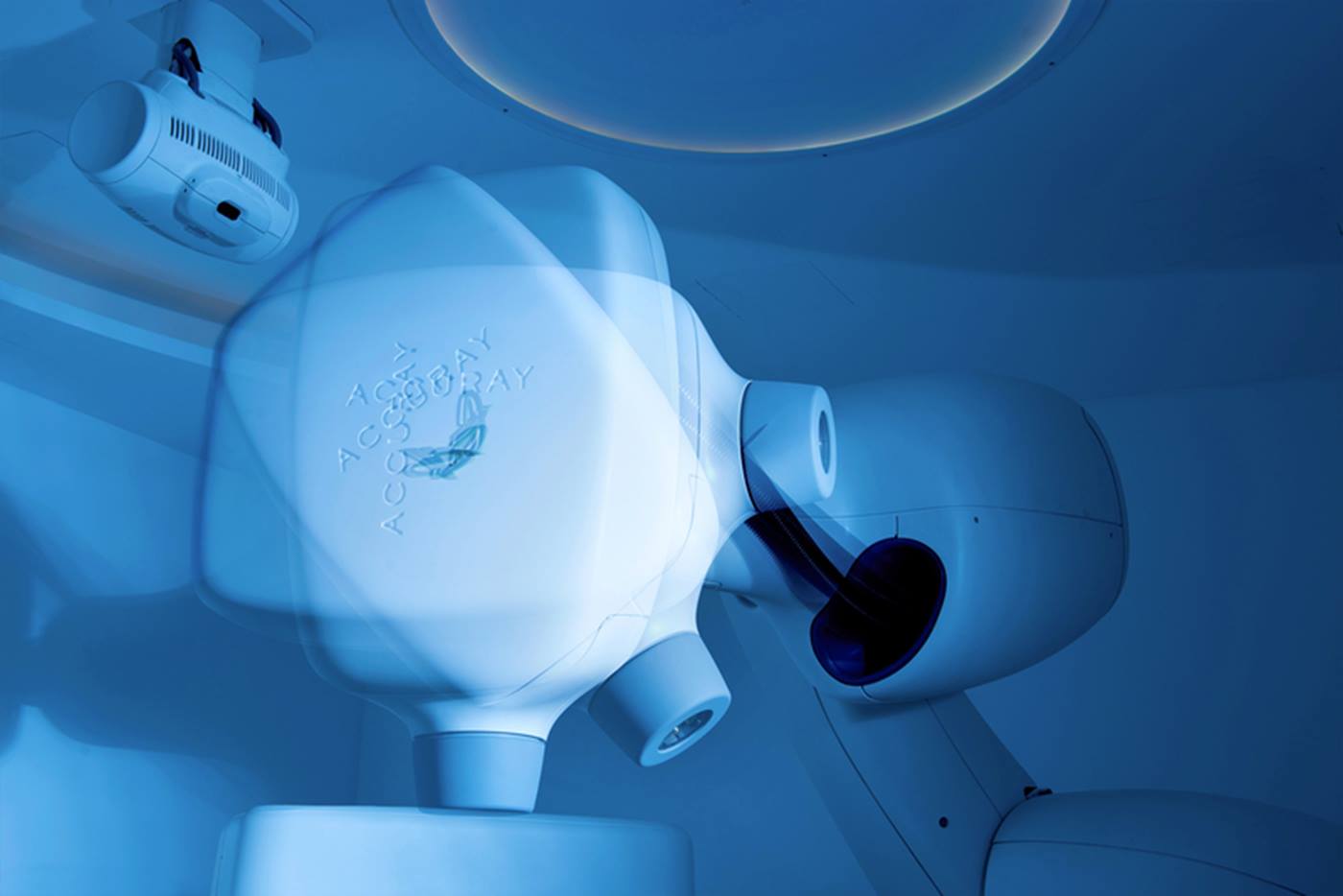
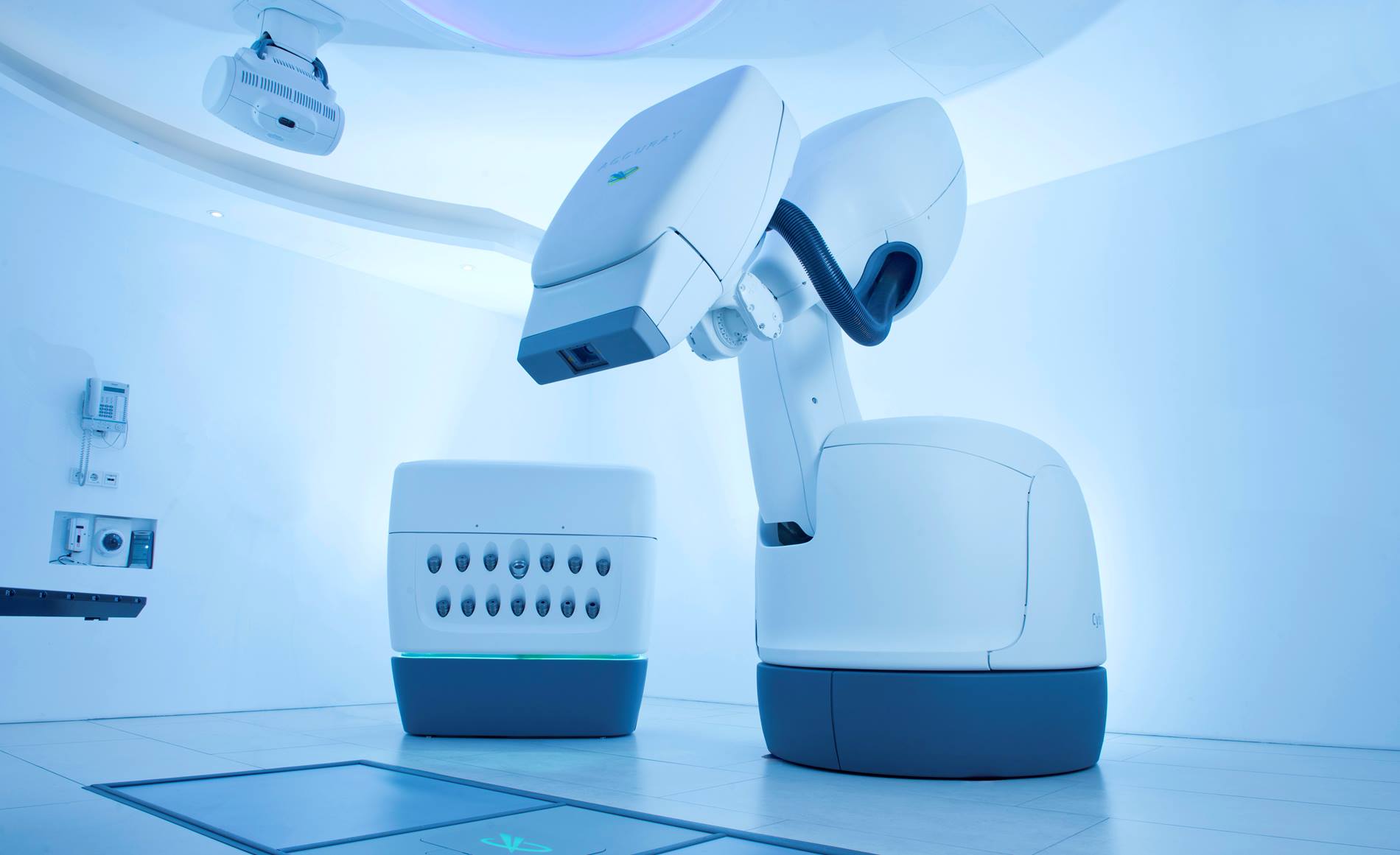
        The virtual knife, better known as the CyberKnife® System, is an alternative to conventional radiotherapy. “With this system, we perform radiosurgery – i.e. a treatment that applies radiation with the utmost precision. Thanks to the integration of an image guidance system with robotic technology, we achieve sub-millimeter accuracy,” explains Prof. Dr. Alexander Muacevic, radiosurgeon and neurosurgeon at the CyberKnife Center in Munich. The original ideas behind the device date back to 1987 at Stanford University in the USA. There, the first commercial system was established as early as 2001, already with an integrated KUKA robot. Back then, most robot manufacturers shied away from having their systems used on patients. Not the case with the market leader from Augsburg, which also distinguished itself with strong support for Accuray, the medical product manufacturer that produces the CyberKnife® System.
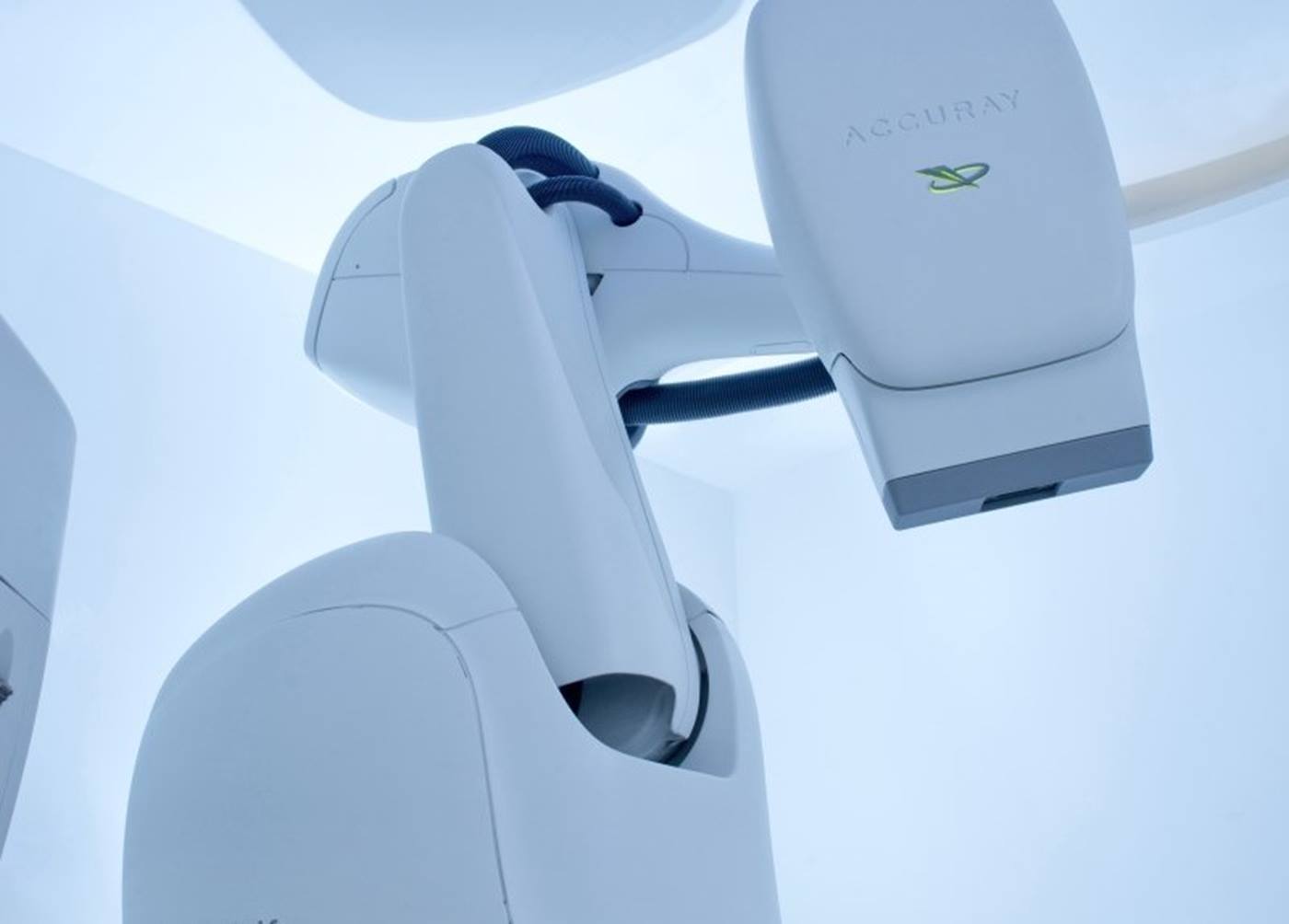
        The number of patients treated with the CyberKnife® System, the robot-assisted system for precision radiation, is growing

        The CyberKnife Center Munich-Grosshadern was opened in 2005 in cooperation with the University Hospital Munich. Today, more than 350 CyberKnife® Systems have been established worldwide. In Munich, the third generation of the virtual knife is already in operation. “We are able to perform high-precision robot- and image-guided irradiation of tumors throughout the body – from the brain to the spinal column and in various organs, such as the lung, liver, kidney or prostate,” emphasizes Prof. Alexander Muacevic.

        KUKA robots for high payloads are used in the CyberKnife® System.

        Precise irradiation through cameras and robot-guided treatment table

        Apart from the robot integrated into the CyberKnife® System, there are also several digital X-ray cameras and an additional infrared camera which are needed for tracking brain and spinal treatments as well as for radiation treatment of organs. Based on these technologies a breathing model can be built, so the tumor can be irradiated with pinpoint accuracy, minimizing damage to surrounding tissue. Additionally, the integrated RoboCouch system – a robot-guided treatment table, which is also based on KUKA robotics – enables intelligent positioning of the patient to the planned treatment position without manual alignment of the patient. This shortens the duration of the treatment and ensures greater precision of radiosurgery.

        Accuray CyberKnife Patient Workflow
        By detecting the natural breathing movement, tumors in the lung can be irradiated with pinpoint accuracy.

        Successful cooperation due to development competence and reliability

        Accuray has particularly praised the development team of its partner of many years, which has played a decisive role in establishing new generations. “I always have the impression that the robot in the CyberKnife® System is somewhat underemployed, that for all its precision it could still do more – particularly with regard to speed,” says Prof. Alexander Muacevic, praising the KUKA technology. This opinion is reinforced by the fact that there has never yet been a problem with the CyberKnife® System at the CyberKnife Center in Munich. “Over all the years, it has proven to be extremely stable and not at all vulnerable to technical problems. In the past 15 years, we have not had a single failure. That is really excellent,” affirms the radiosurgeon.

        With the robot-assisted system, tumors can be irradiated throughout the whole body.

        Fast and precise treatment of tumors and metastases with robots

        Before treatment, the doctor contours the tumor based on the image data generated by CT and MRI and tells the medical physicist the dose for irradiating the tumor. Based on this information, the medical physicist then creates a treatment plan that is transferred to the software. The treatment is then automatically started and fully executed. This is where the KUKA robot in the CyberKnife® System comes in. Doctor and technician monitor the treatment – the actual work is carried out autonomously by the CyberKnife® System. “And this with a degree of precision that no surgeon could match. Achieving accuracy of 0.5 millimeters manually is impossible,” adds Prof. Alexander Muacevic.

        The robot-guided treatment table enablesintelligent positioning of the patients.

        Less stress for patients due to robots for medical applications

        It is this precise targeting of the radiation that is the key benefit of the robot in the CyberKnife® System. It can be used, for example, for treating benign brain tumors, so-called vestibular schwannomas or meningiomas. These would otherwise be removed in a six-hour operation and would be followed by at least a week in hospital and eight weeks of rehabilitation. With the help of CyberKnife® System the duration of the treatment can be reduced tremendously:

        We can treat small and medium-sized tumors very well with our virtual knife, thereby obviating the need for an operation. The patient is already able to return to work the next day.

        Prof. Dr. Alexander Muacevic, radiosurgeon and neurosurgeon at the CyberKnife Center Munich

        Unique possibilities in radiotherapy

        There is nothing comparable on the market, because the robot in the CyberKnife® System ensures a degree of flexibility that a normal radiotherapy device is simply unable to achieve. In the CyberKnife Center, the technology adapts to the patient, and not the other way around. The CyberKnife® System offers more than 1,600 different irradiation options with dynamic components. “This is not possible with a normal radio-therapy device, as these are essentially fixed and can only ever rotate about one or two axes,” emphasizes Prof. Muacevic.

        A unique flexibility distinguishes the CyberKnife® System from other radiotherapy devices.
        Since 2005, patients have been treated at the CyberKnife Center in Munich using KUKA technology.

        Plenty of room for further development of the CyberKnife® System

        The physicians in Munich are currently testing the system for the treatment of cardiac arrhythmia. Furthermore, Prof. Alexander Muacevic also sees potential in the fight against conditions associated with tremor. Since last year, the CyberKnife® System has been used in Munich in the treatment of prostate cancer. “As an alternative to a total operation, we can drastically reduce the treatment time from eight weeks to a single week – and it is scientifically documented that the results are at least comparable if not better,” says Prof. Dr. Alexander Muacevic.

        World map of KUKA locations

        Find KUKA system partners in your area

        Find the right partner for your industry or specific challenge here.

        主站蜘蛛池模板: 久久99精品国产| 成人乱码一区二区三区av| 亚洲第一成人网站| 一本a新久道| 亚洲高清WWW色好看美女| 久久这里只精品国产2| 人妻少妇白浆| 国产精品爆乳奶水无码视频免费| 丁香五月亚洲综合深深爱| 国产成人精品一区二区无| 被c到高潮疯狂喷水国产| 99蜜桃臀久久久欧美精品网站| 99久久国产综合精品女图图等你| 亚洲成a人无码av波多野| 国产360激情盗摄全集| 黔东| 99精品国产闺蜜国产在线闺蜜| ****亚洲成a人片第1集| 国产一区二区三区四区激情 | 亚洲熟妇无码八v在线播放 | 欧美自拍嘿咻内射在线观看| 黄色污网站在线观看| 国产一区二区三四区| 18禁黄无遮挡网站免费| 影音先锋成人网| 国产中文字幕乱人伦在线观看| 男女做爽爽爽视频免费| 国内少妇偷人精品视频免费| 99中文字幕精品国产| 国产精品视频露脸| 久久77| 国产乱人妻精品秘?入口ktv-百度| 久久99精品国产免费观观| 亚洲综合色区另类小说久久久 | 久久精品国产99国产精品严洲| 国产欧美日韩精品丝袜高跟鞋| 免费无码又爽又刺激高潮虎虎视频 | 亚洲www| 国产精品自产拍在线播放| 大香伊蕉在人线国产最新2005| 天堂…中文在线最新版在线|