Internet Explorerの舊バージョンのブラウザが使用されています。 最適な表示にするにはブラウザを更新してください
"We provide 3D playgrounds for the industry"
Mika Anttila is Chief Technology Officer (CTO) at Visual Components. The Finnish company specialized in 3D simulation for factory planning, has existed since 1999 and has been part of the KUKA Group since 2017. Mika Anttila has been an employee from the very beginning. An interview about artificial intelligence in simulation, sustainability and increasingly complex robot systems.
Ulrike G?tz
2024年4月3日
Technology
読了時間: 9分間
Mika Anttila is Chief Technology Officer (CTO) at Visual Components. The Finnish company specialized in 3D simulation for factory planning, has existed since 1999 and has been part of the KUKA Group since 2017. Mika Anttila has been an employee from the very beginning. An interview about artificial intelligence in simulation, sustainability and increasingly complex robot systems.
Mika Anttila, Chief Technology Officer at Visual Components
Mika, how do you become a CTO at Visual Components?
Mika Anttila: I was 14 when I sold my first self-developed software to my neighbours. It was a simple word processing programm. In December 1999, I joined Visual Components as one of the first employees. Ever since I was a child, my goal has always been to solve problems using software - and I still do that today.
How do you explain the topic of "simulation" to someone who doesn't come from industry?
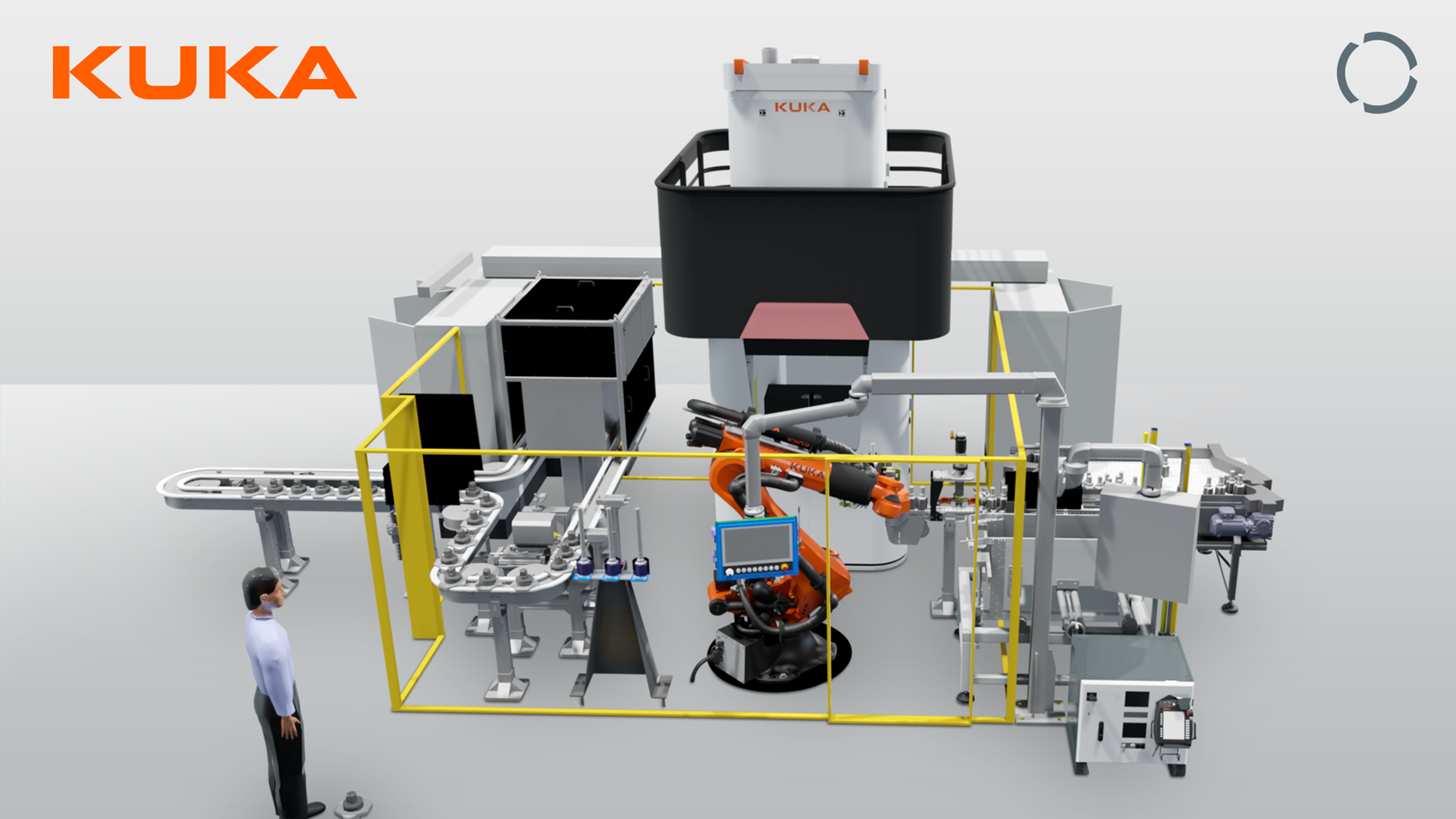
Mika Anttila: You could say that we provide 3D playgrounds for industry. We can virtually represent everything that is to be installed in such a factory - in all the shapes and colours together with realistic operation. This could be an assembly line, a robot or even an employee who will later work in the real factory.
Simulating a robot system or an entire factory in advance as a 3D model, creating digital twins of machines and programming everything offline in advance: These are all clear trends in the industry. Why is that?
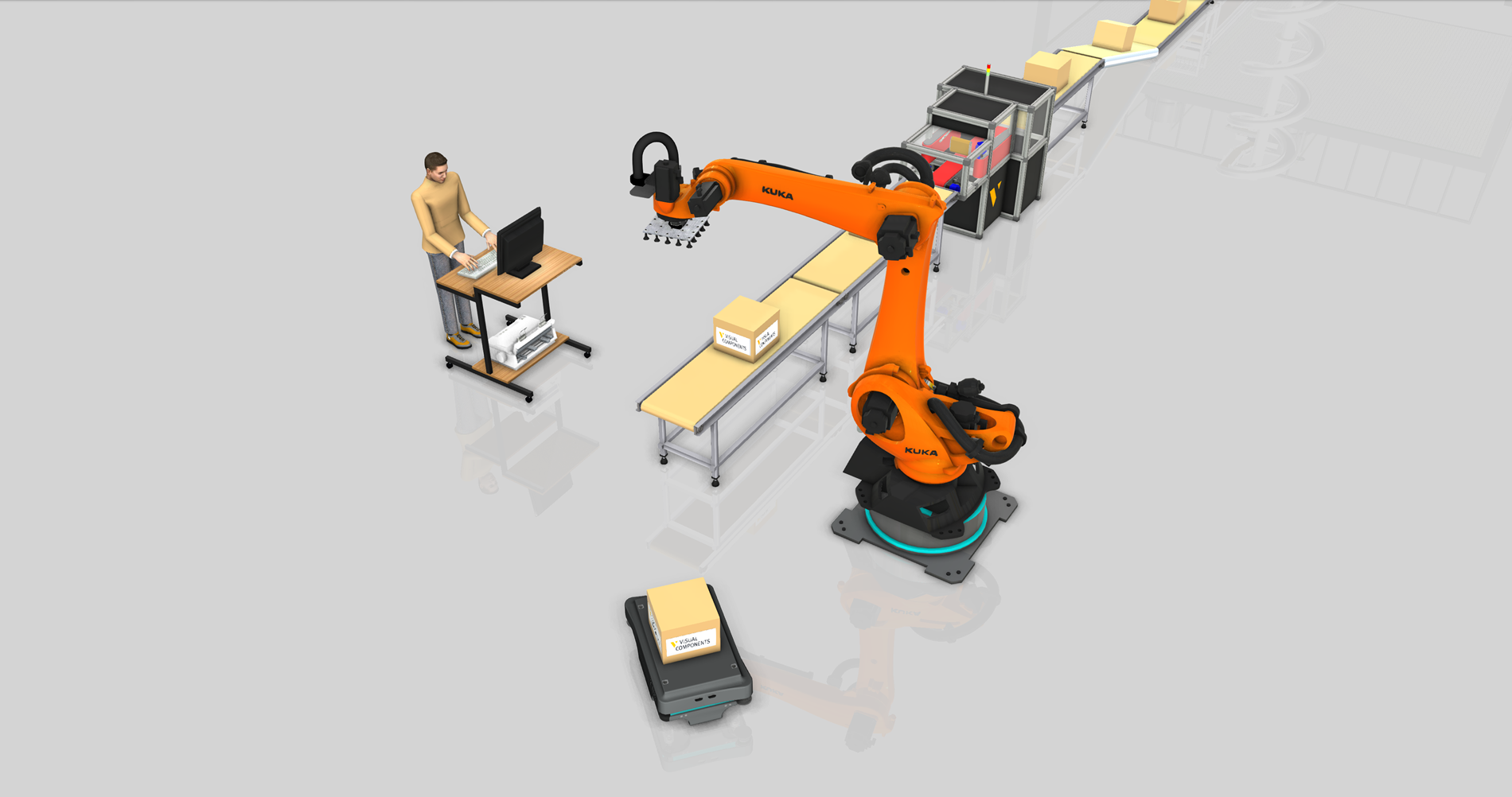
Mika Anttila: There are more and more robots in the world, automation is constantly increasing - and above all the variety of robot systems. In addition to traditional industrial robots, there are now cobots, mobile robots and even the first humanoid robots, which will soon be used in factories. This together with custom production variants increases complexity. It is a great advantage if you can simulate these complex systems and plans in advance as a 3D model. This allows you to quickly find out what works and what doesn't. We support our customers in getting to grips with this complexity.
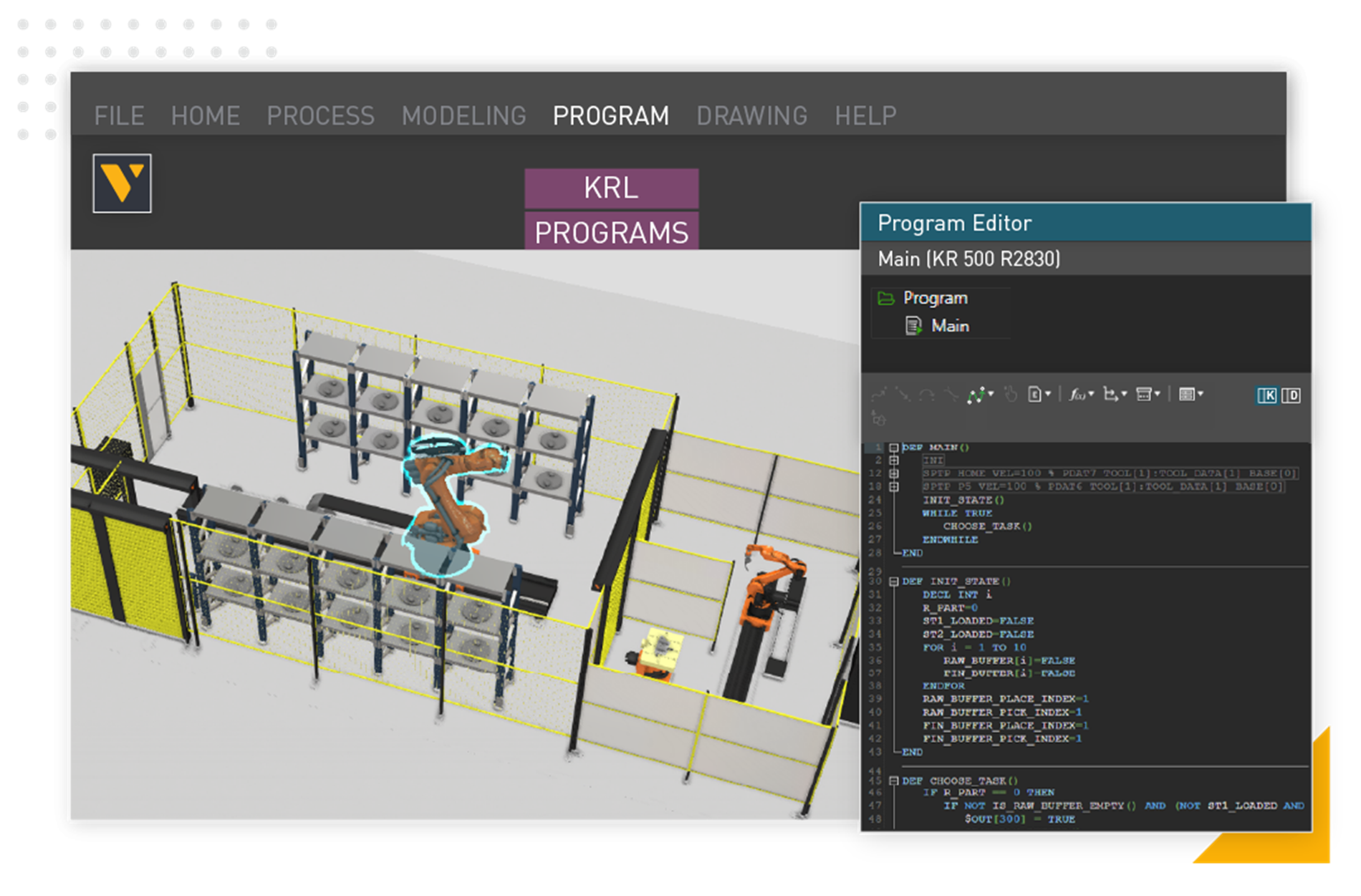
However, these topics are also in vogue because they enable targeted optimization. The entire industry is striving for efficiency. And thanks to simulation, it is also possible to convince decision-makers in companies much more quickly of the benefits of planning. The charm of 3D models is that you can delve deep into robot programming and use realisticanimations to present your ideas and processes very impressively to all target groups.
Does artificial intelligence also come into play here?
Mika Anttila: AI is here to stay and the speed at which AI can be utilized is increasing. We have just started to realize the potential of AI. Simulation can be used to create data sets and test AI algorithms, but AI can also make simulation creation and usage easier by assisting and automating user tasks.. We are working on making AI-based tools available to our customers. There is also a project within KUKA where we are working with Microsoft to explore how AI can simplify the programming of a robot.
Why do customers ask for simulation and offline programming? What problems can it solve?
Mika Anttila: Many of our customers appreciate the creative playground that we offer them with our software. Every day they are looking for solutions on how they can automate processes, how they want to use robots in their production or how new factories can be planned most efficiently. Running through these topics in advance in the 3D model has many advantages: different variants can be tested, processes optimized and the required hardware selected accordingly at the end. The simulation often results in completely new ideas or approaches. This is also very much appreciated.
If we take another look at the trends: What are the biggest challenges at the moment?
Mika Anttila: One challenge at the moment is to enable several people to work together in a 3D model. As the products and the data are not yet in the cloud, they are often only used by one person. With projects as complex as the simulation of an entire factory, however, many more people are naturally involved. The aim must therefore be for everyone to be able to work with the same product and the same data – even if they come from outside the company. This is the point at which cloud aspects and data management can come into play. External contractors could then work on the project together with in-house robot programmers.
In terms of sustainability: what specific contribution can 3D simulation make?
Mika Anttila: I always say that simulation has a kind of sustainability built in. If a project is represented in advance as a 3D model, everything can be reduced to the essentials needed to solve the task: the hardware used, the energy required to operate it - optimizing the production processes always goes hand in hand with optimizing the energy and raw materials used along the way.
And now looking to the future: what can we expect?
Mika Anttila: The digital models of robot systems, especially the digital twins of machines, will become mainstream. They will become the standard for communication and collaboration - from system design to programming. 3D simulated machines, robots etc. with all details like robot programs can be easily accessed and managed in the cloud environment. There will definitely be a focus on user-friendliness - as is always the case when a topic becomes mainstream and is therefore used by a broad mass of people and not just experts.