<sub id="for6y"><s id="for6y"><form id="for6y"></form></s></sub>

    <cite id="for6y"></cite>

        <s id="for6y"></s>
        亚洲一品道一区二区三区,国产无套粉嫩白浆在线,51妺嘿嘿午夜福利,人人妻人人澡人人爽人人精品av,欧美一区二区三区欧美日韩亚洲,欧美一本大道香蕉综合视频 ,884aa四虎影成人精品,国产精品久久久久久福利69堂

        Select your location:

        Location

        Machine tools and KUKA robots machine components for KUKA robots

        Robot-based KUKA system technology for machine tool automation is used, among other things, for the loading and unloading of machines and supports elements of Industrie 4.0: A glance at component machining at KUKA shows what future-oriented production looks like.


        Machine tool automation with connection to the cloud

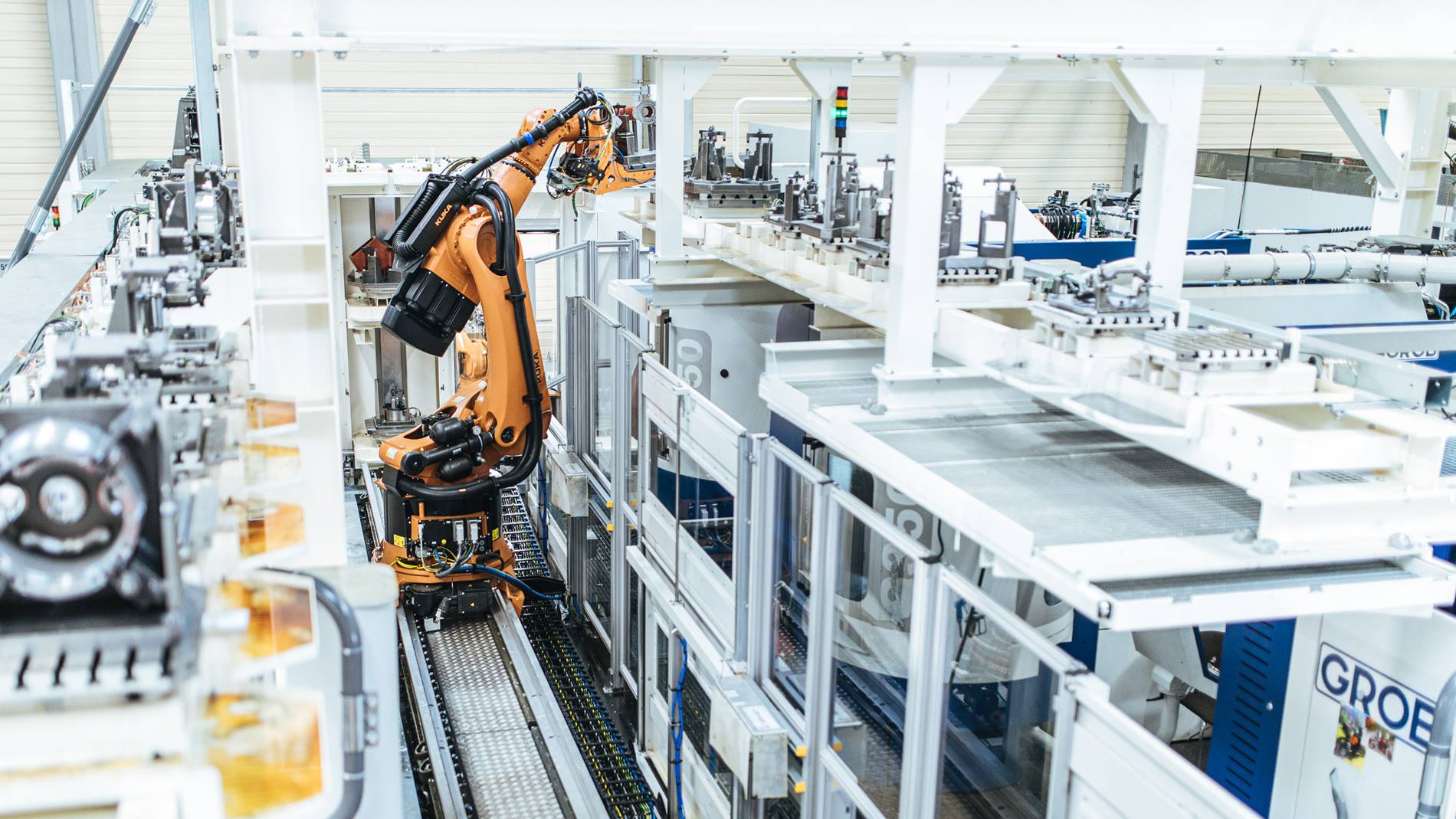
        At first glance, production hall 10 at KUKA’s site in Augsburg looks just like a typical production environment at a German or international machine manufacturer. What you don’t directly notice: All seven of the cells – in which eleven KUKA robots work hand in hand with commercially available machine tools from different manufacturers – are connected to the cloud and feature various Industrie 4.0 functions.

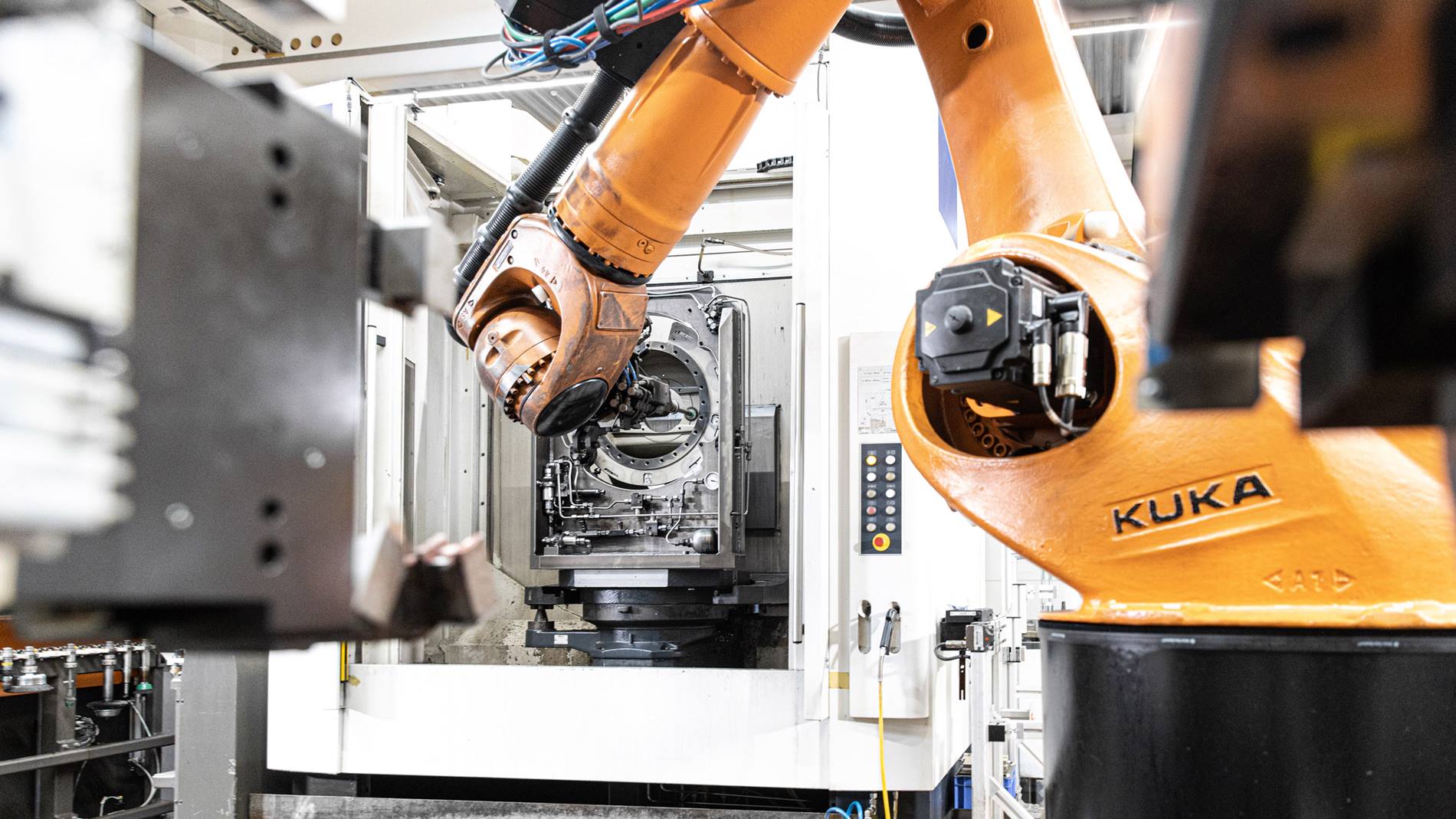
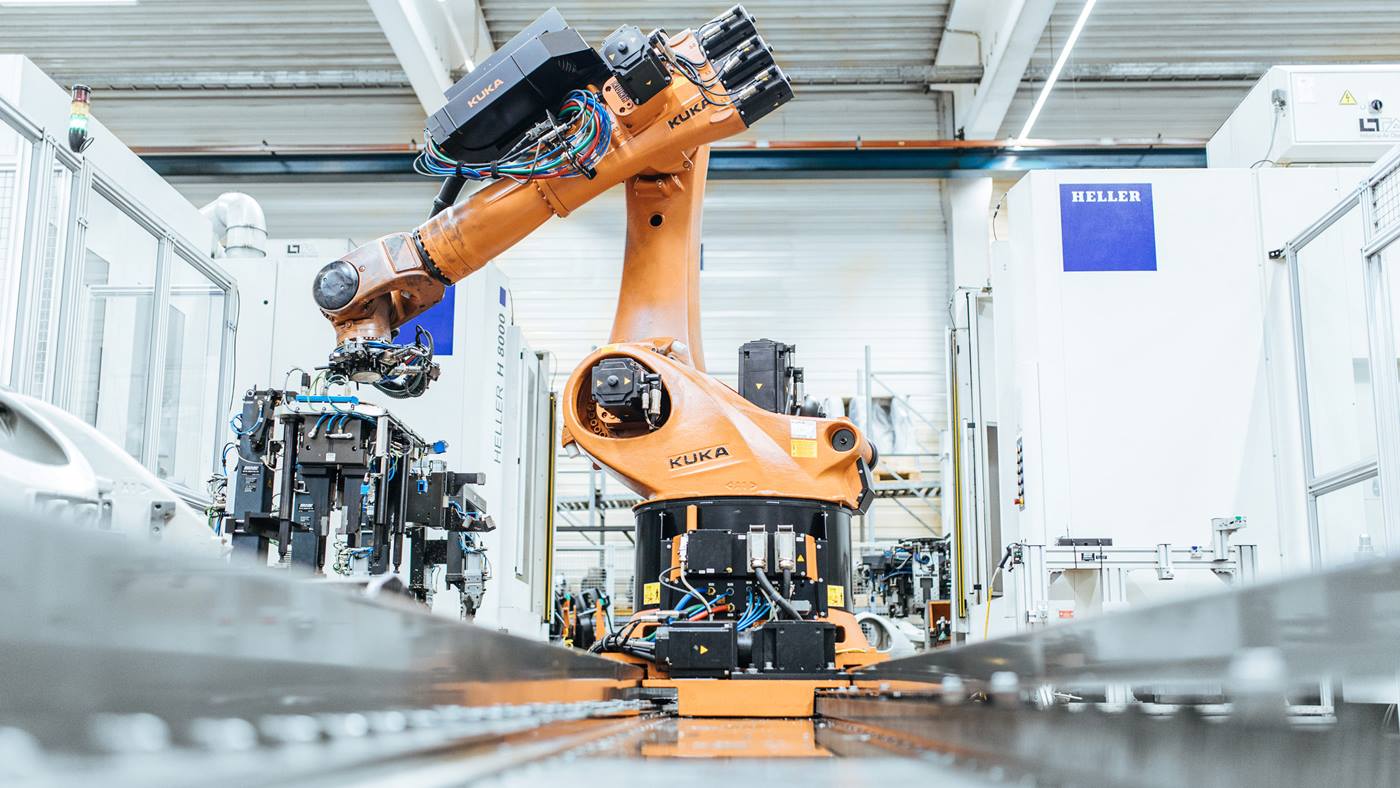
        Machine tool automation: The KUKA robot performs the loading and unloading.

        Increased efficiency through the automated loading and unloading of machines

        “In this hall, the robots work on the various components that we need to produce our robots,” says Rainer Eder-Spendier, Administrator for Automation and Robotics, in summary. Among other things, the robots machine and process base frames, rotating columns and link arms. The components are assembled in the adjacent robot assembly shop. Since the robots carry out the loading and unloading of the lathes, production has few operators and can even be unmanned for a certain period of time.
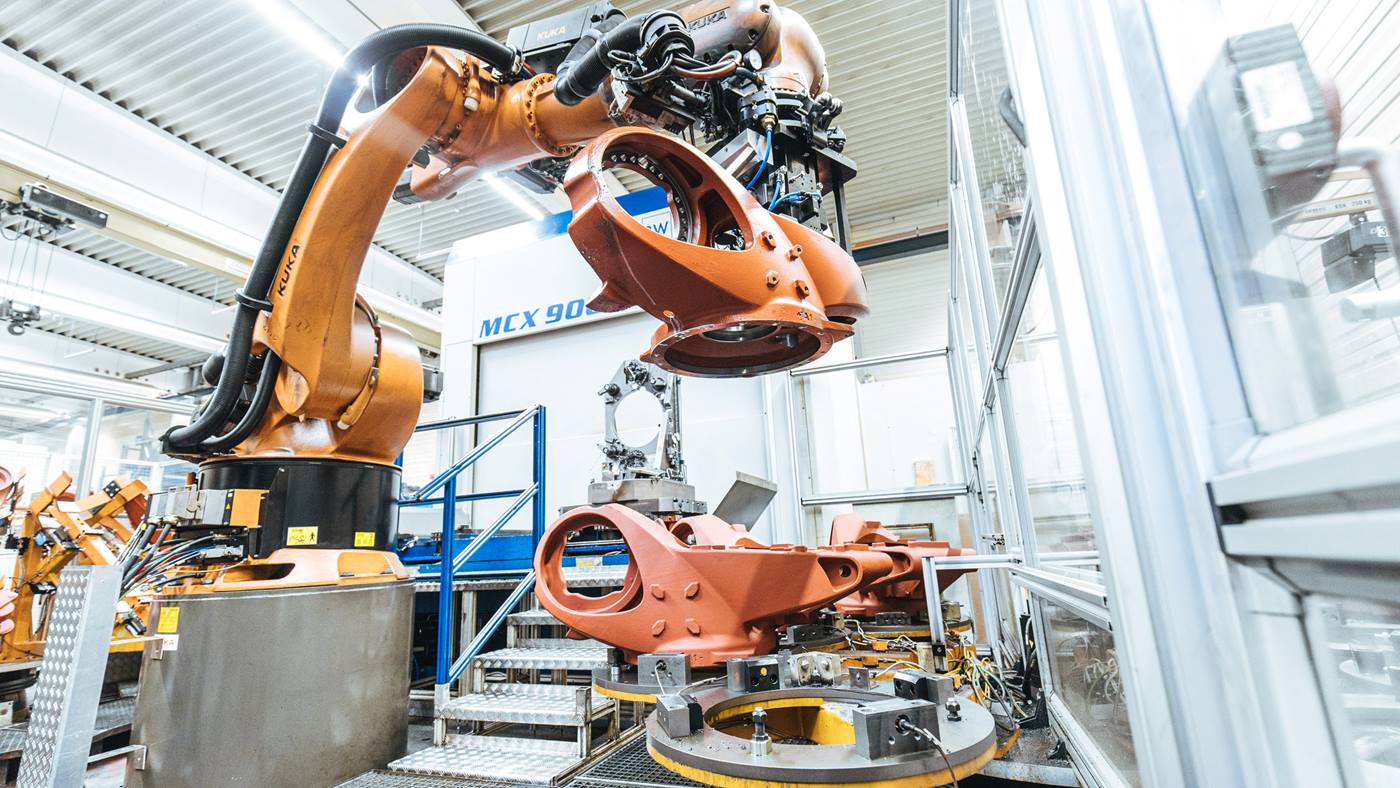
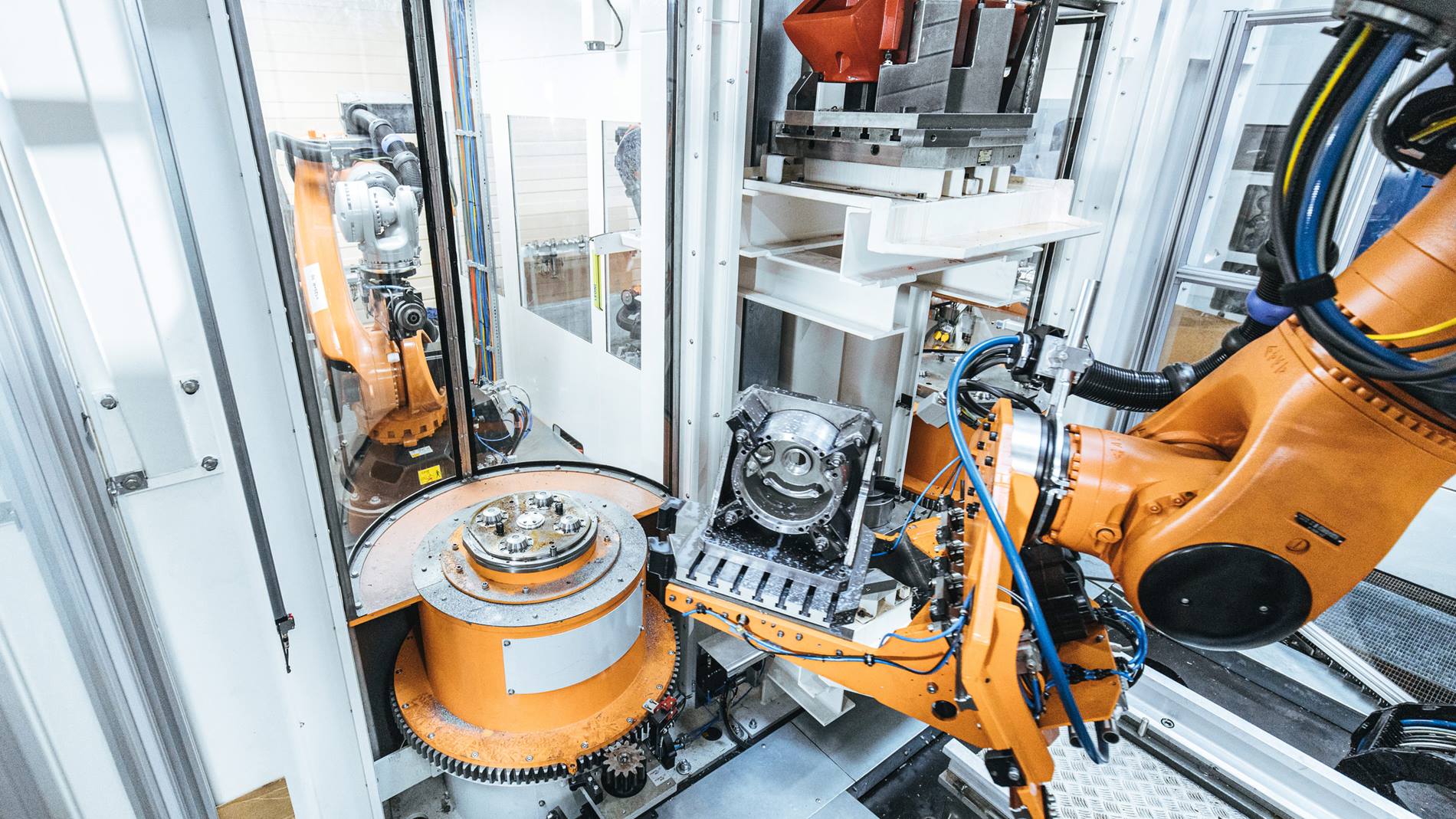
        To do this, the cells are equipped with feed units such as rotary tables or feed conveyors, which are loaded with material by human operators. Productivity is primarily increased by the fact that the robots machine and perform secondary activities and thus create added value. “Deburring the workpieces, for example, is a task that the robots carry out in most cells,” notes Rainer Eder-Spendier.

        The KUKA robot performs the loading and unloading of the Burkhardt+Weber machine.

        Different machine tools and robots machine and work hand in hand?

        As an example of this, three machine tools from Grob are installed in one cell. The worker clamps the workpiece to be processed in a clamping fixture and then onloads it into the cell together with the pallet and fixture. Here, a KR 600 R2830 KR FORTEC takes care of the linking of the individual steps. The robot approaches the three machines via a linear unit and also transports the material from the machine tool to the reworking cell where the metal parts are finished. Finally, the robot returns the finished part to the operator position. Maximum acceleration and short cycle times when changing parts in limited space are only possible through the use of KUKA.SafeOperation. 

        The KUKA robot transports the material from the machine to the reworking cell.

        The robot also carries out the loading and unloading of the machines

        In another cell, a KR 500 L480-3 MT KR FORTEC is used for the loading and unloading of two Heller machines. The robot is installed on a linear unit for this purpose. Four feeder stations supply the raw materials. As soon as processing has been completed in the machine, the robot removes the part and deburrs it at the changeover station. Finally, the robot sets the part down on a turntable.

        Once they have been processed in the machine, the robot machines and deburrs the components.

        A Burkhardt + Weber machine is also loaded and unloaded by a KR 500 KR FORTEC. The machine is equipped with a double pallet changer: On one pallet there are clamping fixtures for link arms, on the other there are ones for rotating columns. While the robot loads one workpiece onto a pallet, the machine simultaneously processes the workpiece clamped on the other pallet.

        Advantages from the automation and networking of machine tools

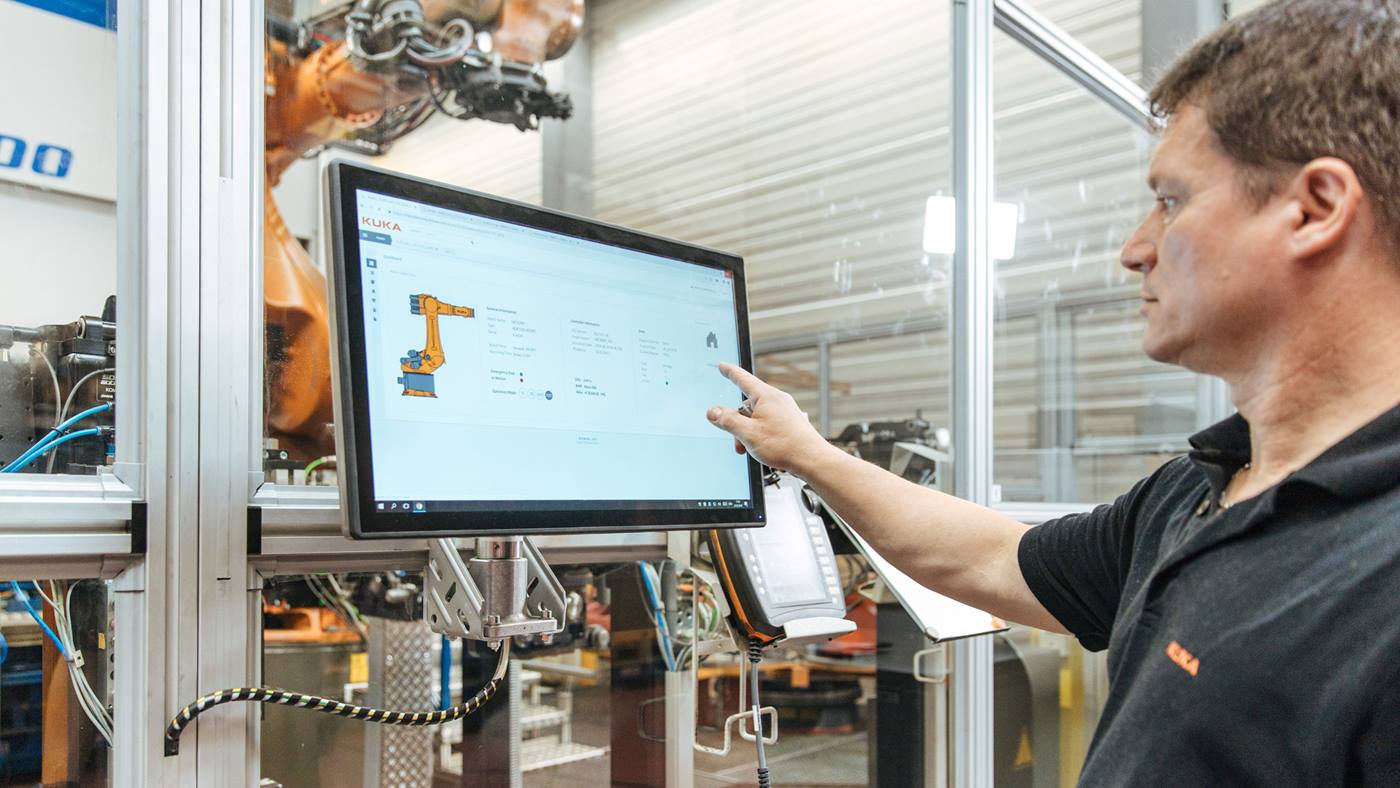
        Similar to a smart watch, the robots and machines collect a wide array of data and transmit these data to the cloud. The data collected by the KUKA robot can then, for example, be processed and evaluated via KUKA Connect. In this way, it is possible to have full visibility and exercise full control over the current production process at all times.

        ?

        “In the event of error messages, we can access KUKA Xpert, a kind of Wiki platform in which our service technicians have compiled appropriate solution proposals for many years. There are hundreds of thousands of entries there. Beyond this, we can trace every process step through the built-in technology and virtual shadow. This functions similar to a black box on an airplane. And via software we can be alerted to irregularities in the production process – comparable to an ECG,” states Rainer Eder-Spendier in summing up the advantages of networking.

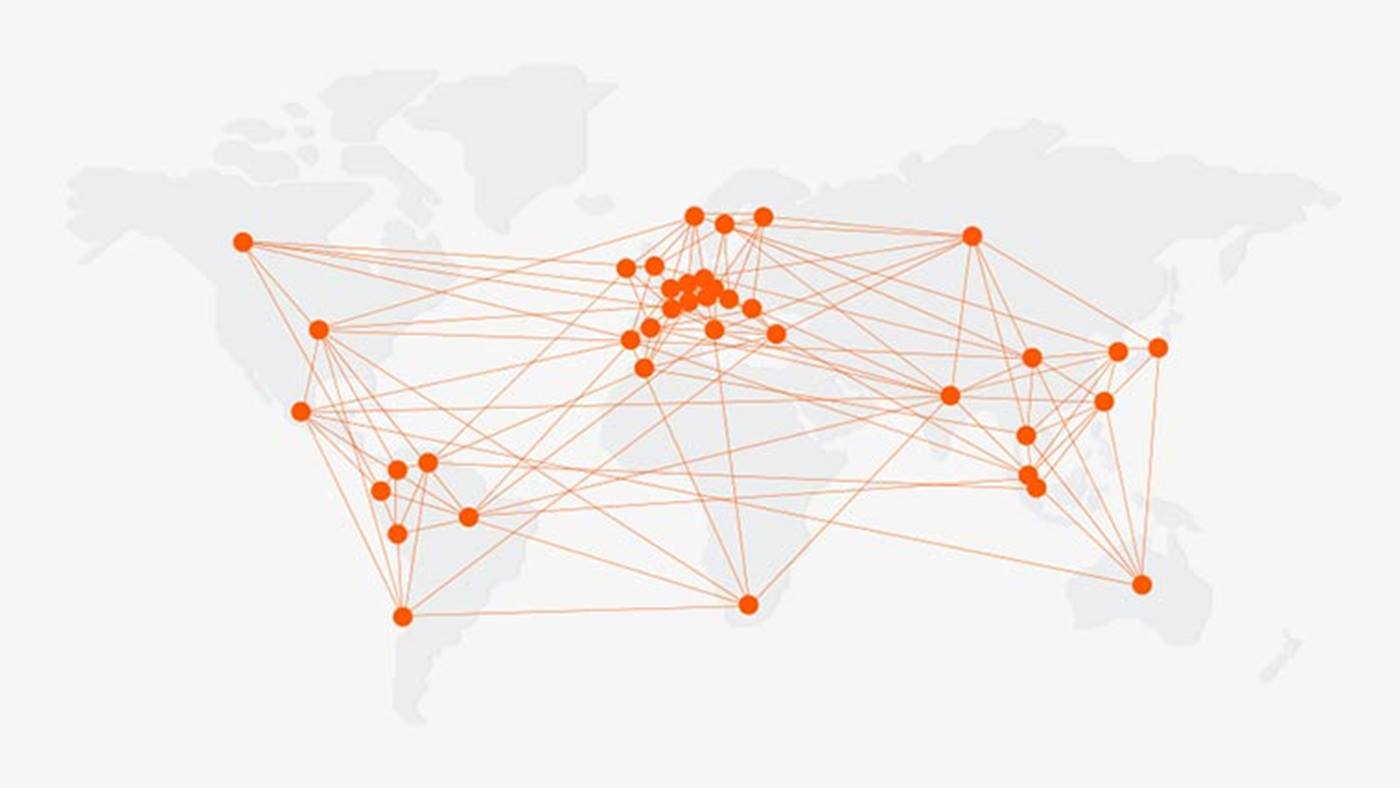
        The robots and machines collect all kinds of data and transmit these data to the cloud.

        Automation makes work considerably easier for the operators, since in most cases the manual loading and unloading of the machine tools and lathes with heavy workpieces is no longer necessary.

        Rainer Eder-Spendier, Administrator for Automation and Robotics

        Find KUKA system partners in your area

        Find the right partner for your industry or specific challenge here.

        主站蜘蛛池模板: 久久精品aⅴ无码中文字字幕重口| 国产乱人伦真实精品视频| 欧美日韩成人| 农村乱人伦一区二区| 国产一级av一区二区在线| 日韩人妻无码一区二区三区| 国产一区二区三区内射高清| 日韩国产精品一区二区av| 中文午夜乱理片无码| 亚洲最大的熟女水蜜桃AV网站| 宣武区| 亚洲综合无码日韩国产加勒比| 亚洲天堂视频在线免费观看| 欧美疯狂三p群体交乱视频| 国产一区二区三区九九视频| 人与兽XXX| 久久精品人妻中文系列| 国产精品免费亚洲一区| 日韩精品人妻在线| 好紧好滑好湿好爽免费视频| 九九热精品在线观看| 精品人妻一区介绍| 国产精品国产高清国产av| 一区二区二区三区av| 精品人妻系列无码专区久久| 岳乳丰满一区二区三区| 欧美日韩精品一区二区视频| 亚洲中文久久久精品无码| A片在线不卡观看免费观看| 中文字幕亚洲人妻| 国产精品毛片大码女人| 波多野结衣亚洲一区| 亚洲性猛交xxxx| 亚洲春色在线视频| 久久综合亚洲鲁鲁九月天| 麻豆精品新a v视频中文字幕| 青草99在线免费观看| 久久久久亚洲AV成人网站软件| 毛片一级精油按摩无码| 久久精品99久久久久久久久| 26uuu另类亚洲欧美日本|