You are using Internet Explorer and will not be able to use our website properly. Please change to an up-to-date browser for ideal presentation of the website.
Friction stir welding with robots raises e-vehicle production to a new level
Experts agree that electric power will replace internal combustion, but e-vehicles' large and heavy battery housings pose special challenges. KUKA has elevated manufacturing with the development of three systems for a global automotive supplier. Robot-based friction stir welding (FSW) with the KUKA FSW application module and KUKA cell4_FSW enhances manufacturing quality, economics and sustainability.
Friction stir welding: High quality, cost-effective and sustainable
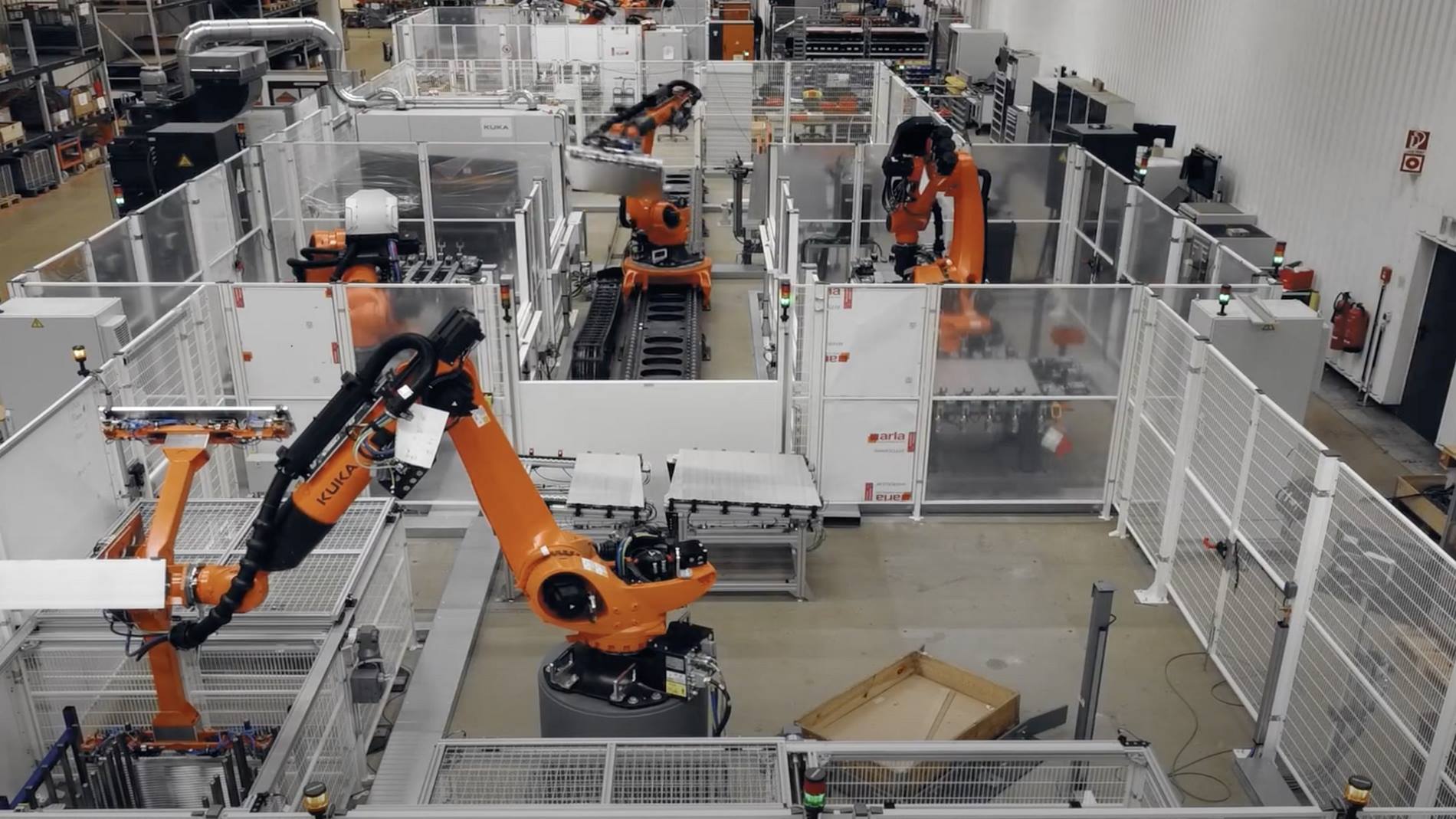
At a major automotive supplier in Portugal, eight KUKA robots – including three friction stir welding application modules for the KR FORTEC in three cell4_FSW cells – take care of the future of driving: electric-car battery housings, created from various aluminum alloys to lighten vehicle weight as much as possible. The robot-based FSW process produces the highest-quality welds cost effectively, and low energy consumption makes it a green technology. According to the customer, one meter of friction stir welding already costs less than the equivalent wire consumption in arc welding.
Robot-based friction stir welding: Production line for battery supports
Particularly in the field of e-mobility, friction stir welding of battery supports has established itself at many manufacturers and suppliers in the automotive industry.
Fully automated welding for e-mobility
The heart of an electric car – its battery – fastens to the vehicle's floor through a housing: an arc welded frame made of extruded profiles closed with a sheet metal plate, or double-walled extruded profiles. KUKA has supported its Portuguese customer's production of these housings for several years, and already has supplied three separate systems. “We have grown along with the customer's requirements – from the individual welding task to the fully automated production line,” said Patxi Blanco, Global Key Account Manager at KUKA, who has been involved in the lightweight battery housing process from the outset.
High requirements for battery-compartment seams
Battery housings for electric cars require special weld seams. Unlike in hybrid vehicles, the battery in a purely electric car is larger, heavier and integrated directly into the floor. In 2019, this customer was dissatisfied with the weld quality of a different type of system from another manufacturer. “This process requires a high degree of rigidity, and because they are integrated into the floor, the housings are crash relevant. They must withstand enormous forces,” explained Stefan Fröhlke, Senior Manager Process Solution at KUKA.
More batteries, more systems
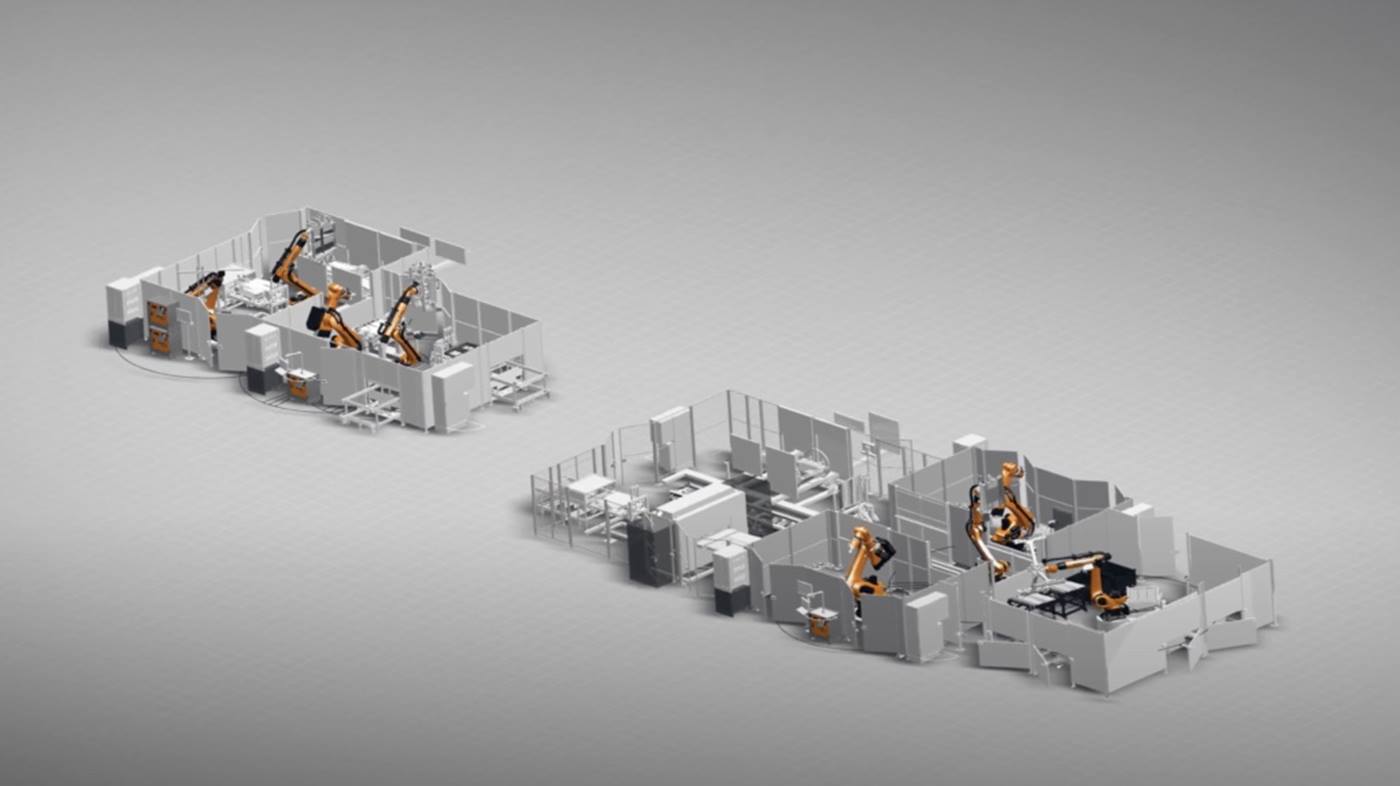
Friction stir welding is ideally suited to meet these requirements. To improve welding quality at the global automotive supplier, KUKA initially developed a system with two cells, each with one KR FORTEC. Because a single system could weld different battery compartments, the customer ordered another system from KUKA the same year – this time, a cell with one robot that could operate not just one, but three fixtures. This system could perform three separate welding tasks that otherwise required three non-robotic systems.
Robot-based friction stir welding for battery housings in two KUKA cell4_FSW cells.
Cost-effective and dynamic: This is how the battery compartment for the electric vehicle is created
“This single solution provides the same output volume as two systems, without the associated costs for personnel and production space,” said Patxi Blanco. Because fixtures can be loaded and unloaded in a separate safety area during the welding process, KUKA's extremely cost-effective solution uses up to 95% of the capacity of the friction stir welding robot. Another advantage: Thanks to the robot, the process is more dynamic and requires less floor space.
We performed installation and startup at our plant in Augsburg. The customer carried out acceptance of the system there as well, so on-site installation went quickly and smoothly.
Advantage: Fast and smooth installation
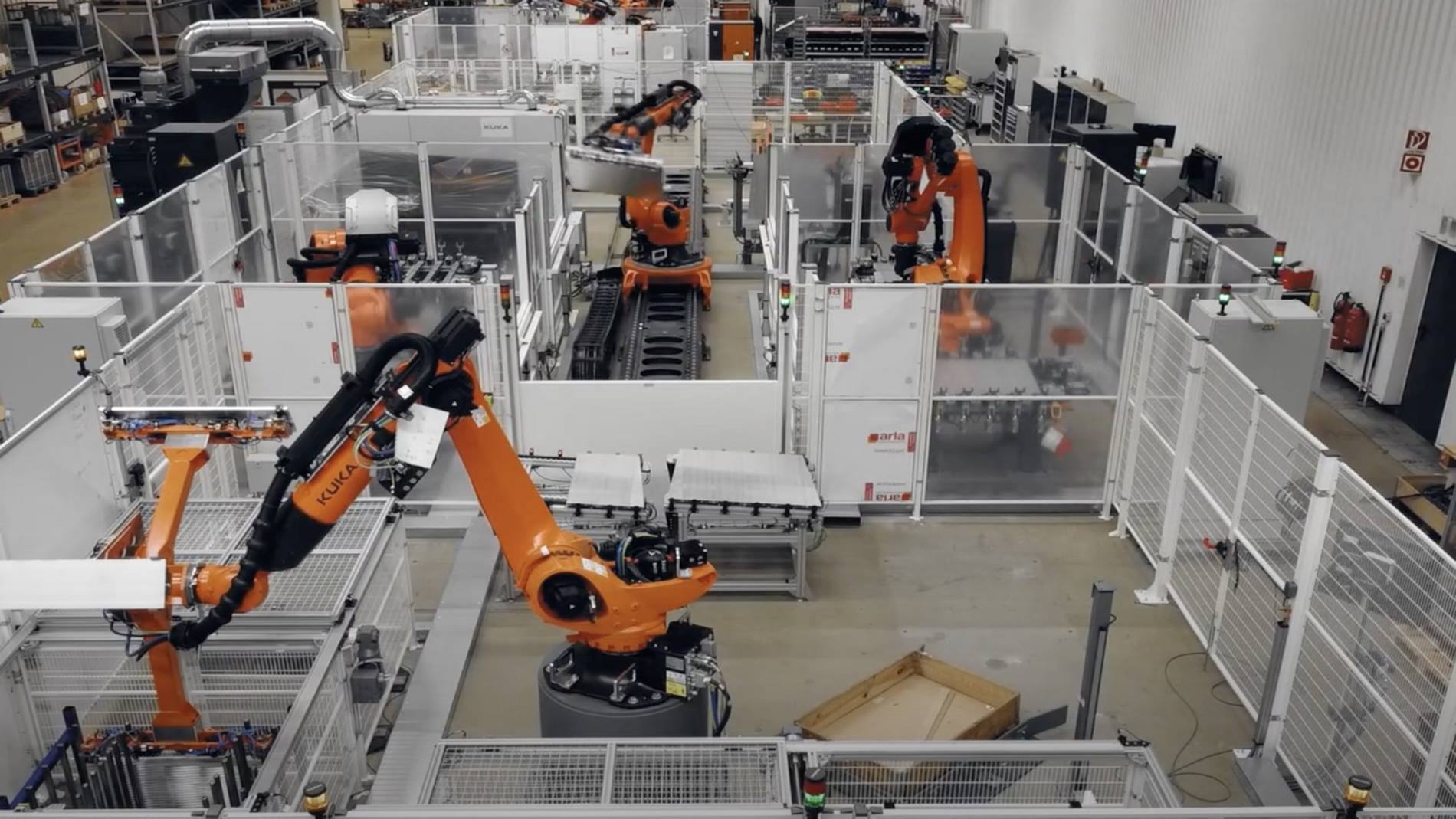
This story did not end with two systems. Three years later, robots handle more than the simple welding process: now, the entire production process has been automated. In three KUKA cell4_FSW cells, eight robots perform four work steps to produce battery housings from various aluminum alloys in accordance with stringent requirements.
The first step welds the base plate while the second step deburrs it. Next, the robots weld the frame to the base plate, and then deburr the entire battery compartment in step four. “We performed Installation and startup at our plant in Augsburg. The customer carried out acceptance of the system there as well, so on-site installation went quickly and smoothly,” said Patxi Blanco, describing this long-term electromobility project.
The first step involves picking the individual parts for the base plates.
Friction stir welding for utmost precision
Developed specifically for the growing electromobility market, the KUKA cell4_FSW friction stir welding cell offers the utmost in versatility and configuration options in addition to outstanding economic efficiency. “Path accuracy within 0.5 mm makes highly accurate and perfect weld seams possible,” explained Stefan Fröhlke. Precise path control takes advantage of the KR FORTEC 500 R2830 MT, which impresses with its high stiffness characteristics and long service life. At the same time, precise laser-assisted path calibration compensates for path deviations and helps ensure that each seam meets high requirements for leak tightness and crash resistance.
Durable tool ensures high productivity
During the development phase, the service life of tools for friction stir welding proved challenging. Continuous improvement of the shoulder and pin on the robot extended tool life considerably with new materials and coatings. “This doubled productivity for the customer. Building up additional inventories also means that we can ensure supplies within a few days if needed,” said Patxi Blanco.
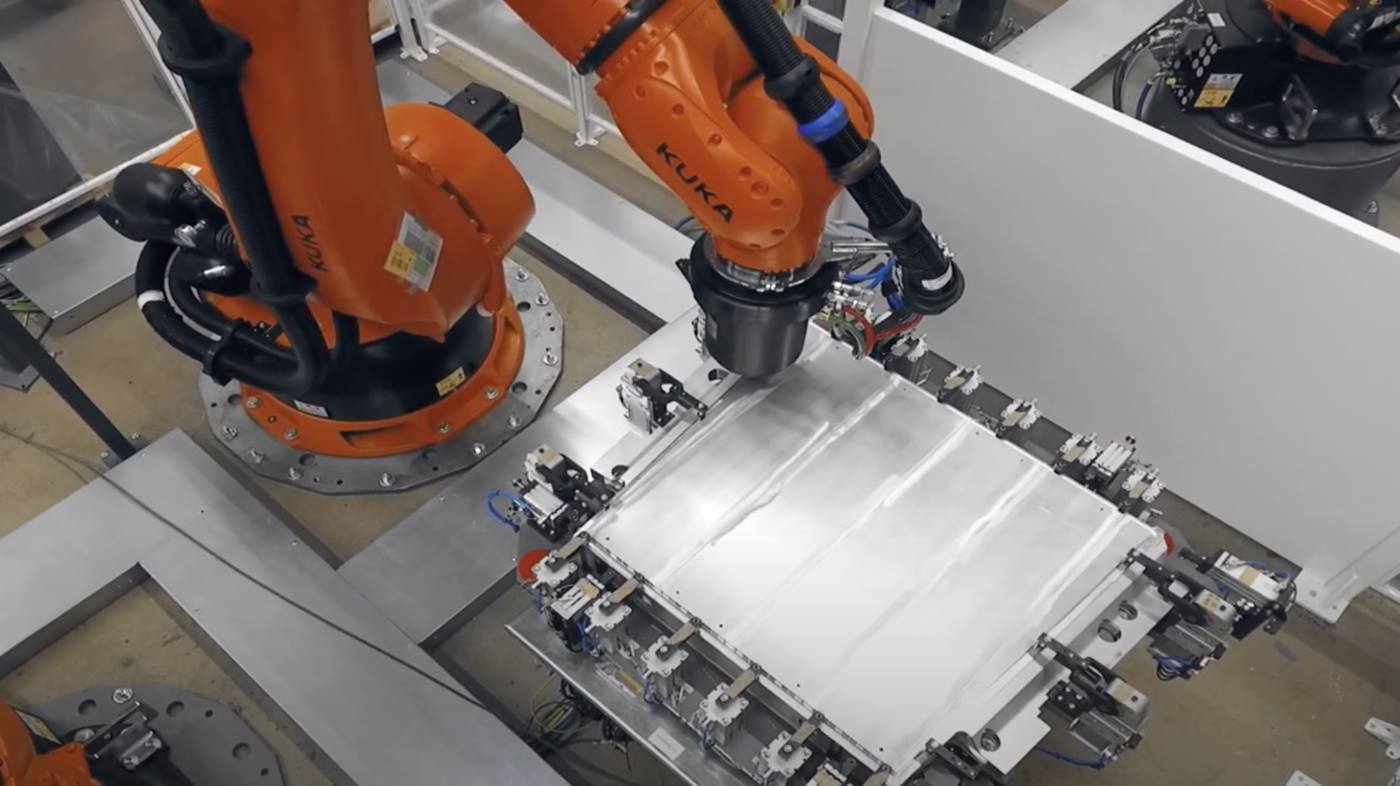
The KR FORTEC 500 R2830 MT welds the base plate to the frame.
E-mobility – the topic of the future
This long-term project has created a strong partnership between KUKA and the automotive supplier, with ongoing discussions of new battery platforms. KUKA thus supplies not only the system and the engineering, but also the process expertise for active support of new developments.
After all, one thing is certain: The demand for electric cars, and thus also for battery holders, will continue to increase. Experts anticipate by 2032, for the first time, more electric vehicles will be registered in Germany than vehicles with internal combustion engines – not only because of the reduction in CO2 emissions. This will increase the need for lightweight battery housings with the right strength – and for automated FSW solutions to create them.
Expand your knowledge of rotational friction welding, agitation friction welding, and magnetic arc welding. Learn through practical examples, applications, and specific automation solutions for your production.