Vous utilisez le navigateur Internet Explorer. Pour bénéficier d’une représentation optimale, veuillez changer votre navigateur.
Humanoid Robots in Manufacturing
Humanoid robots are robotic systems with human-like characteristics that can perform complex tasks. KUKA is pursuing the use of humanoid robots with a focus on autonomous systems that create concrete added value in real production environments. How far has the development of such systems progressed? And in which areas are humanoid robots used today? In this article, we take a look behind the technology and show how humanoid robots are shaping the future of manufacturing.
What is a humanoid robot?
The term “humanoid” means “human-like.” A humanoid robot is therefore a human-like robot system that resembles the human body in its external form or manner of movement. The aim is to take on tasks that are very complex and typically performed by humans – for example, using two arms, sensors, and autonomous mobility. At KUKA, the focus is on functional autonomy: mobile platforms, AI-supported sensor and vision systems, and flexible grippers are crucial for industrial use.
Do humanoid robots already exist?
Yes, humanoid robots already exist and are being tested in initial industrial pilot projects. Overall, the technology is still under development and is not yet mature, especially for industrial processes. The key challenges in industry include costs, training requirements, and all aspects of safety.
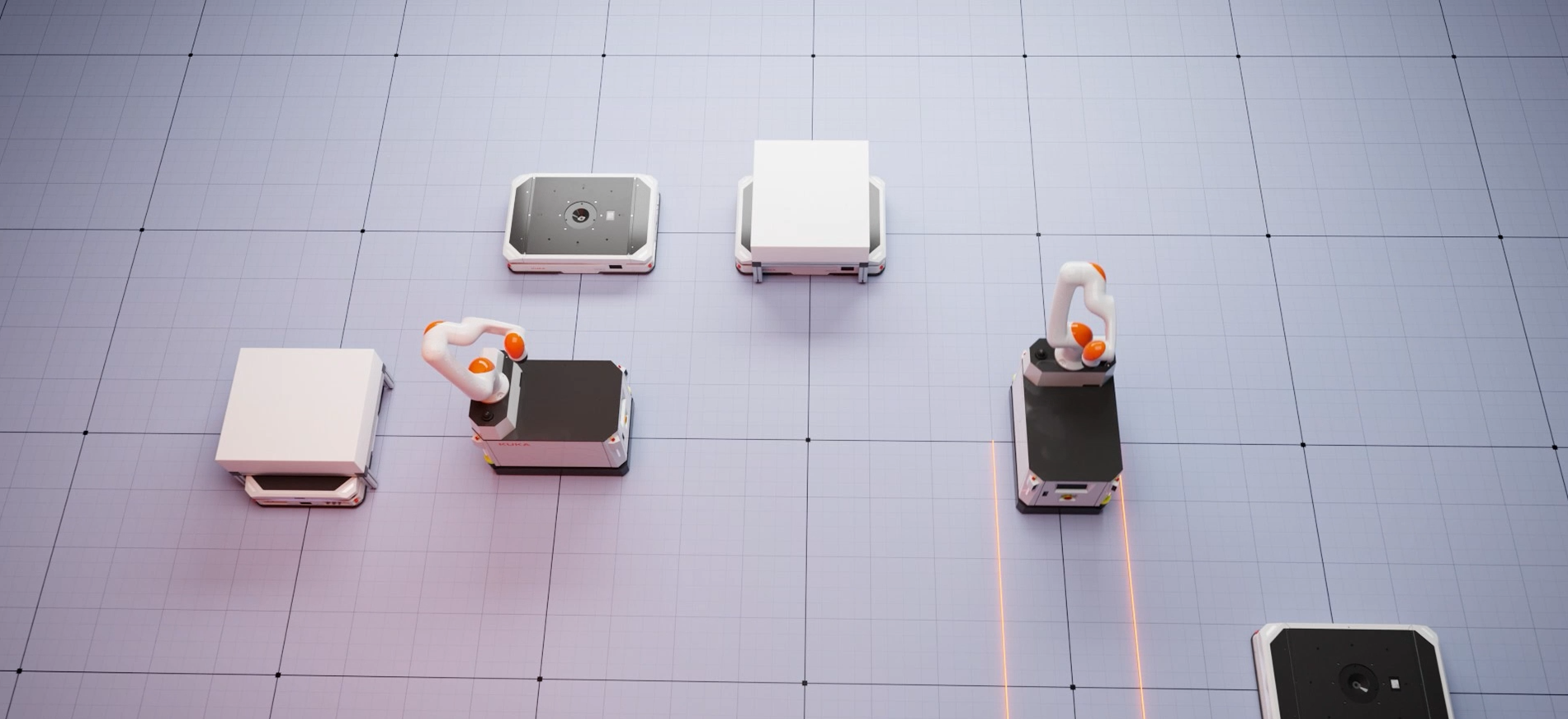
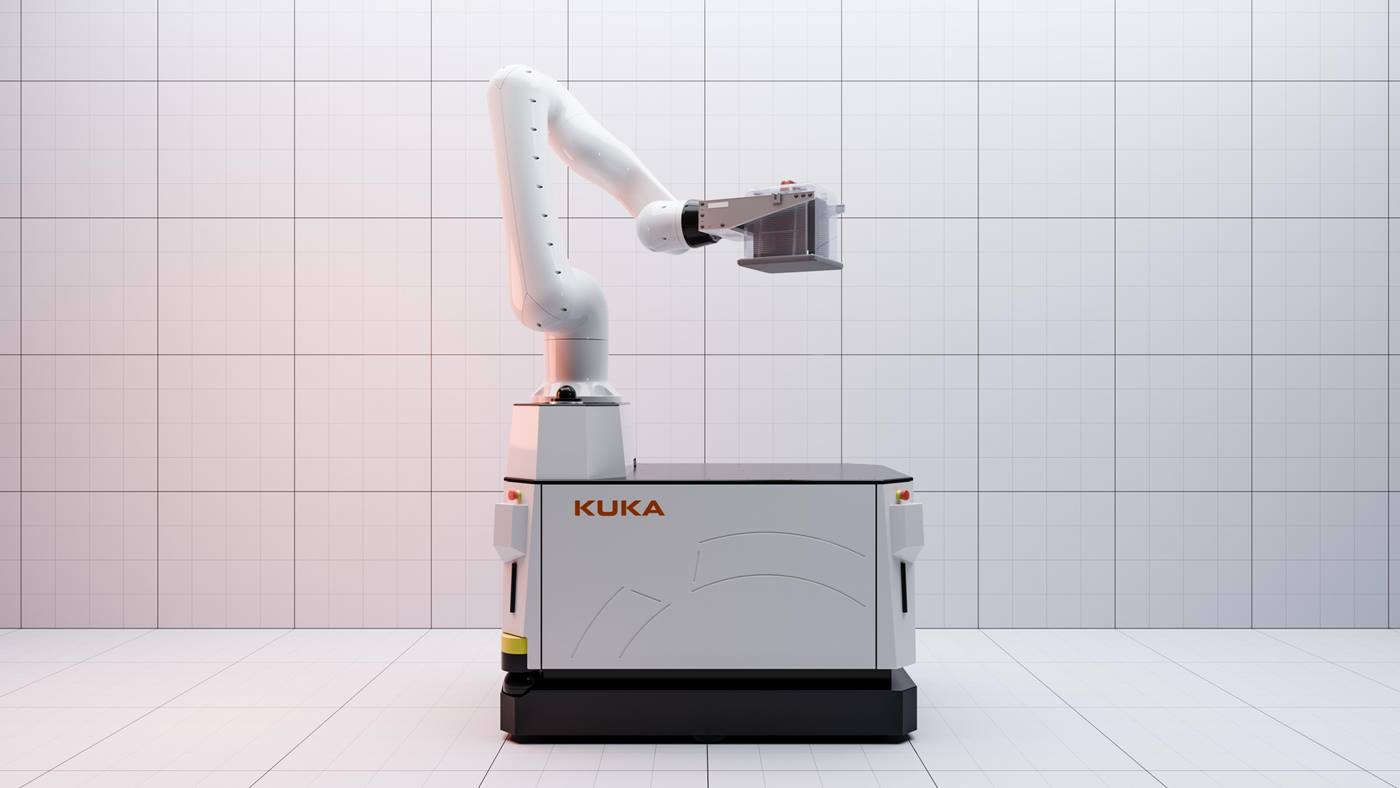
KUKA can already efficiently cover the frequently cited advantages of humanoid systems—such as mobility and high flexibility—with existing robots and platforms such as the KMR iisy.
KUKA pursues the topic of humanoid robotics with a clear focus on autonomy, robustness, and seamless integration into industrial workflows. In industrial applications, customers are less concerned with the external form of a robot than with a convincing balance between cost, benefit, and functional performance. Whether humanoid, AMMR (autonomous mobile platform with a robot mounted on it), or classic robotics platform—the decisive factor is the concrete added value for the customer on site.
KUKA does not see humanoid robotics as a short-term product goal, but as part of a broader vision. Everything is framed within the concept of “Physical AI” – the interplay between hard-ware and software, and our Automation Management Platform – a single pane of glass for our robot fleets.
Who builds humanoid robots?
In addition to specialized start-ups, established companies are also working on humanoid robotics solutions.
KUKA is pursuing the use of humanoid robots with a focus on autonomous systems based on mobile platforms and equipped with AI, sensor technology, and gripping technology.
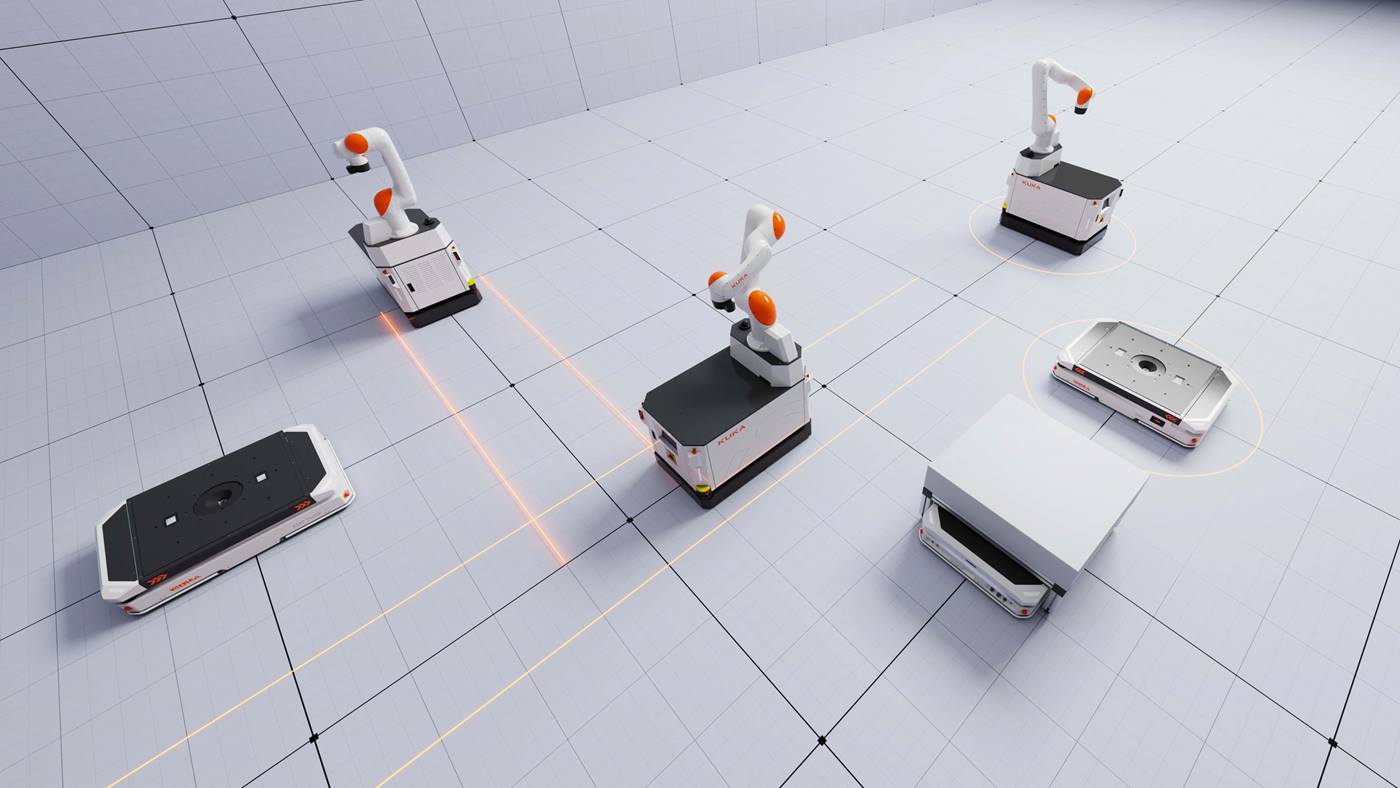
Our focus is on autonomous mobile manipulation robotics (AMMR), physical AI autonomous systems, as well as digital twins and simulation. By combining mobile platforms, robotic arms, and AI, we focus on industrial and professional logistic service markets.
Where are humanoid robots used?
Currently, the focus is on simple handling tasks in logistics, among other things. In the future, humanoid robots could also be used for more complex tasks in assembly, maintenance, or service—anywhere where flexibility and autonomous decision-making are required.
The frequently cited advantages of humanoid systems – mobility, ambidexterity, and high flexibility – are key requirements for customers in industry. KUKA therefore focuses on the following aspects, which are crucial for autonomous robot systems:
Mobile platforms with high flexibility
Sensors and vision systems, especially AI-supported image processing
Variable gripper systems for different tasks
Open interfaces for maximum integration capability
Simulation for training and optimizing the application
KUKA can thus already cover many possible areas of application for humanoids very efficiently with existing solutions:
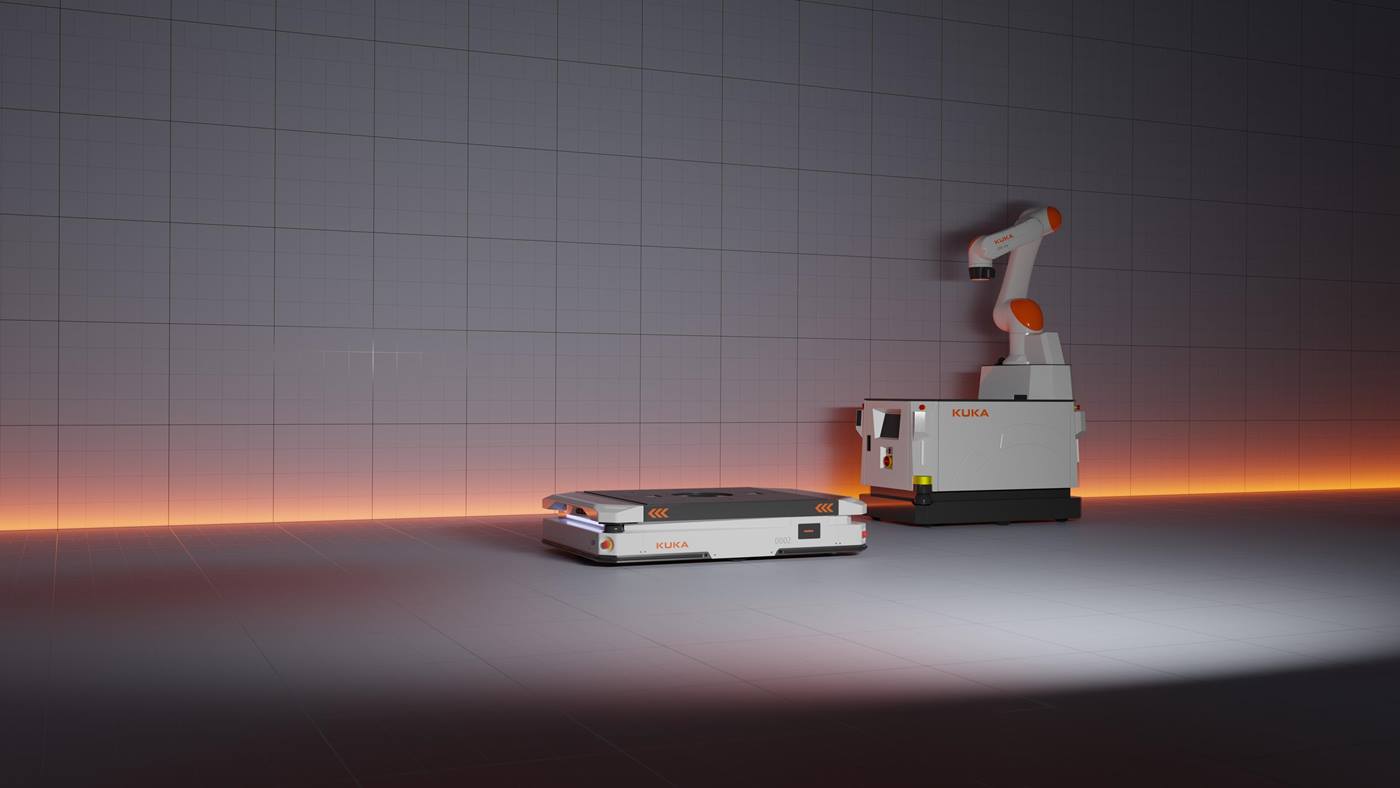
Autonomous mobile robots (AMRs) perform tasks in logistics, production, and even healthcare. They navigate independently, work collaboratively with humans, and can be flexibly integrated into existing processes. Examples such as the smart factory at KRONE or automated furniture production with Formetal show how mobile platforms from KUKA create real added value. With autonomous mobile manipulators, KUKA offers modular, driverless platforms that are combined with robot arms. They are highly flexible, scalable, and ideal for applications such as material transport, order picking, collaborative manufacturing, and healthcare.
Central real-time control of heterogeneous AMR fleets with AI-supported planning, optimized processes, and simple, programming-free integration into existing systems.
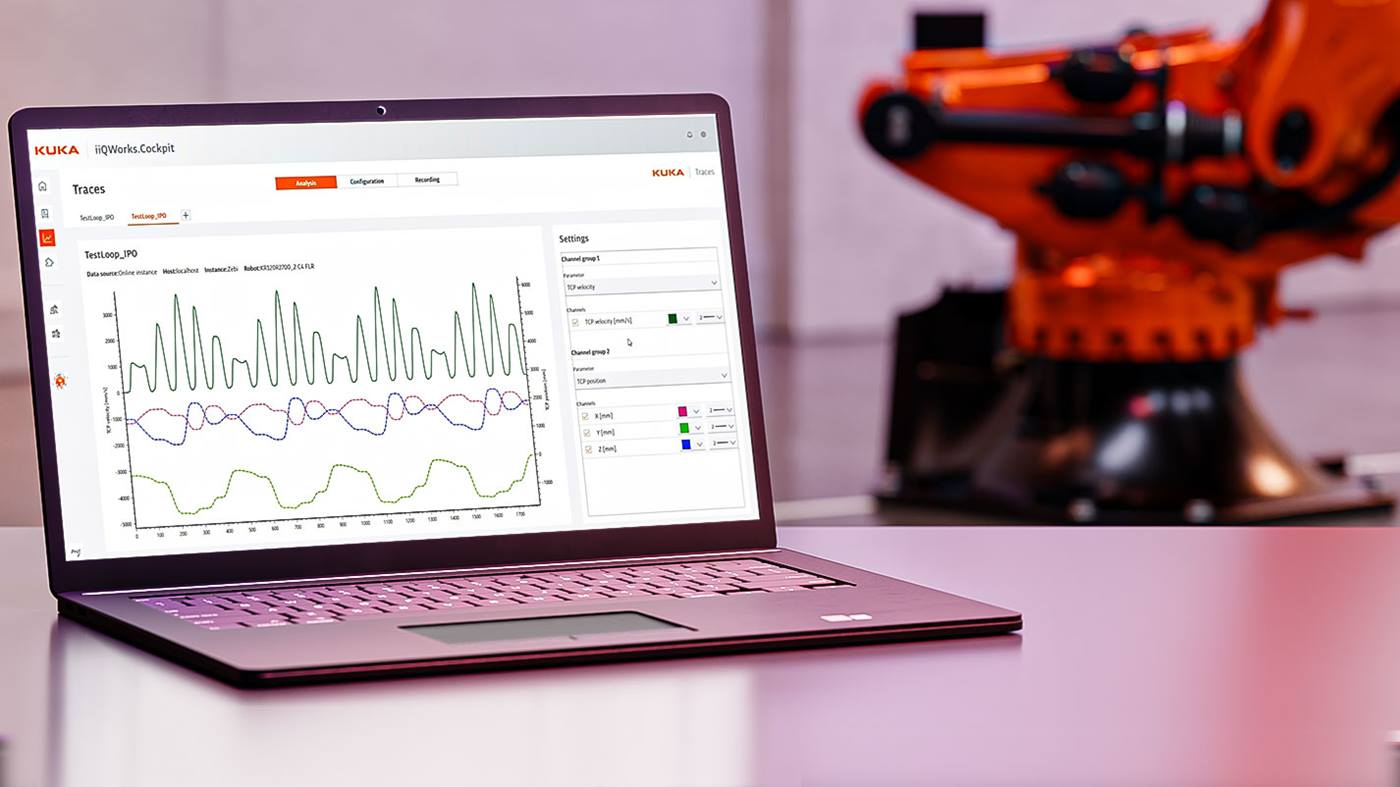
In addition, KUKA offers iiQWorks.Sim simulation software, a powerful tool for virtual commissioning and offline programming of cobot applications on the KMR iisy platform. This allows customers to simulate, optimize, and validate the respective cobot application in advance while the platform is stationary.
With Visual Components, the KUKA Group provides a powerful 3D simulation platform on which entire factories can be planned virtually, processes checked, and production flows optimized—even before the actual commissioning takes place.
With Swisslog, the KUKA Group offers intelligent automation solutions for warehouses and logistics that optimize material flows and make picking processes more efficient.
Swisslog Healthcare supplies automated systems for hospitals and pharmacies, such as pneumatic tube and medication management solutions, which take over routine tasks and thus relieve staff.
Which industries benefit most from humanoid robotics?
The automotive industry, retail, logistics and warehousing, manufacturing, electronics, healthcare, and pharmaceuticals show particular potential for humanoid robotics. Data centers could also benefit from this technology in the future.
1. Automotive industry
The automotive industry is considered a pioneer in the introduction of humanoid robotics. According to the International Federation of Robotics (IFR), most pilot projects involving humanoid robots are currently underway in vehicle production. These involve tasks such as assembly, material handling, and quality inspection—often in combination with AI-supported sensor technology and mobile platforms.
2. Logistics and warehousing
The logistics industry is also showing strong interest in humanoid robots. Their ability to move autonomously and grasp flexibly makes them ideal for picking, sorting, and transport processes. Studies by IDTechEx and Xpert.Digital predict particularly high growth potential in this area until 2035.
3. Healthcare and nursing
In the medical field, there is potential for humanoid robots as assistance systems – for example, in patient care, medication distribution, or imaging procedures. KUKA already offers robots for medical use and, together with Swisslog Healthcare, automation solutions for hospitals and pharmacies.
4. Retail
In retail, humanoid robots could take on tasks that are currently very labor-intensive, such as displaying goods, restocking shelves, or interacting directly with customers.
5. Manufacturing
The manufacturing industry offers a wide range of applications for humanoid robots. In addition to classic assembly work, they can also assist with machine operation, material transport, and quality control. Their flexibility makes them interesting for production lines with frequently changing processes.
6. Electronics
Precision and fine motor skills are crucial in the electronics industry. Humanoid robots could be used here, for example, in the assembly of printed circuit boards, the handling of sensitive components, or the final assembly of complex devices.
Can I buy a humanoid robot?
Many of the advantages often attributed to humanoid systems—mobility, two-arm capability, and flexibility—are already among the core strengths of KUKA's established automation portfolio. Humanoids are therefore a possible path within a broader field of technology. KUKA's guiding principle: form follows function. The decisive factor is the added value that robotics delivers in real production environments. Click here to go directly to the my.KUKA Marketplace.
At KUKA, humanoid robotics is part of an overarching vision: everything is in the context of physical AI, the interaction between hardware and software.
What does the future of humanoid robots look like?
Autonomous mobile manipulation represents KUKA's vision of intent-based robotics. In the coming years, these systems—which often include much-discussed humanoid robots as a possible form factor—will fundamentally change how robots work in different environments and applications.
In industry, customers are less concerned with the external appearance of a robot than with a convincing balance between cost, benefit, and functional performance.