
Automation in the electronics industry: "You have 2 minutes left to change the belt"
Printed circuit boards fitted with electronic components are found in every electronic device. Over the years, they have had to become increasingly compact and at the same time more powerful. This has led to the extremely small components now being soldered directly onto the surface of the circuit board. These are therefore surface-mounted devices (SMD) and the technology behind them is called SMT (surface-mounting technology). From a technological point of view, this sounds very mature. But as part of a technology partnership, KUKA and other companies have taken a closer look at how the material can be automatically fed to the SMT lines.
"The electronics industry is generally very technology-savvy and open to automating processes that are currently still manual," says Ralf Ziegler, Global Business Development Manager at KUKA, referring to the market and his years of experience in the electronics sector. Splicing is one such process. What is behind it? In general, it can be said that SMT lines already operate very efficiently and autonomously. Machines line up one after the other according to their task, are fed belts at the side of the line containing the smallest electronic components, and present fully assembled boards at the end of the line. Usually, several lines of machines face each other in a hall, with an aisle in between where people walk up and down to feed the machines with belts.
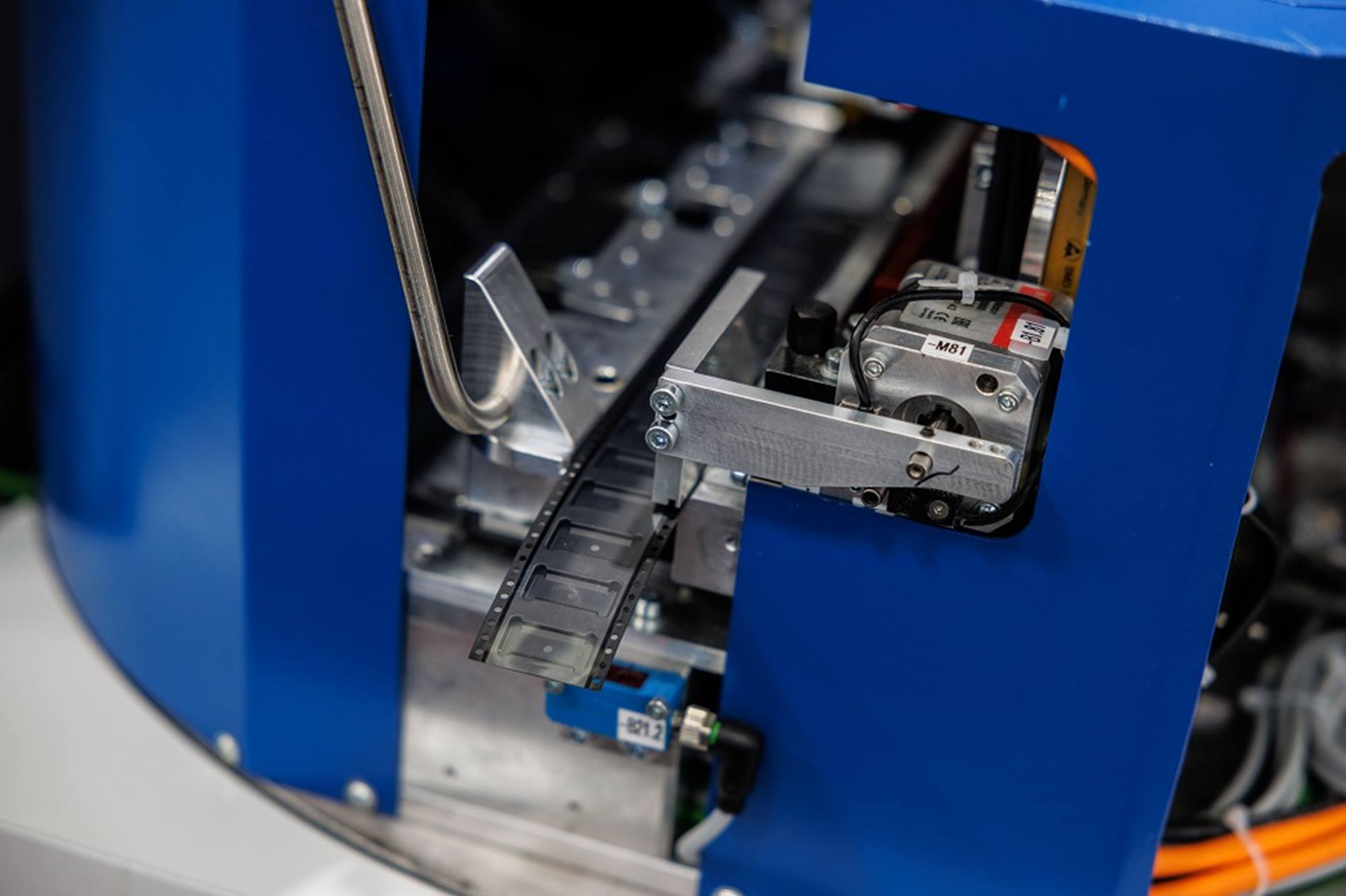
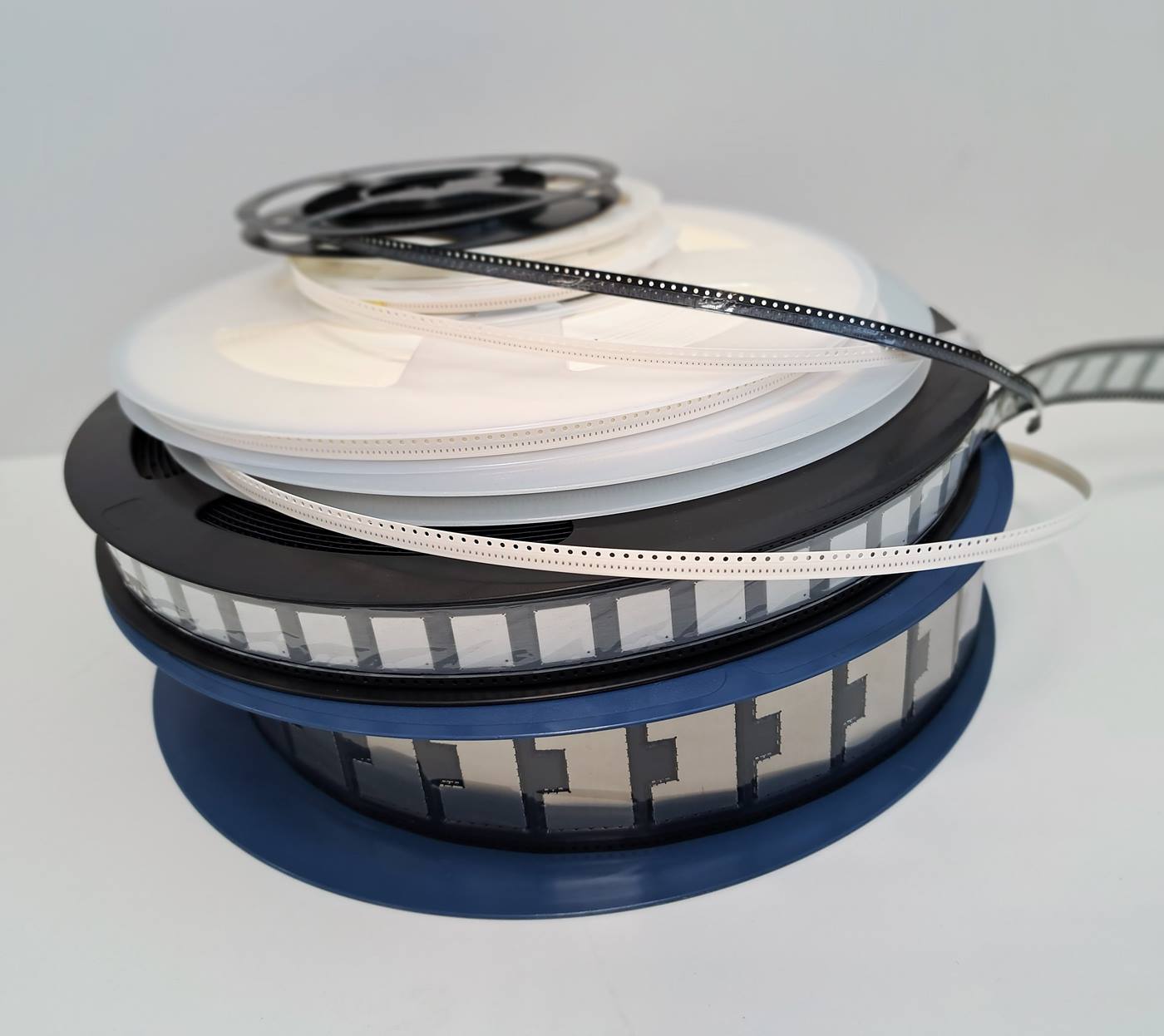
"Up to 20,000 or more electronic components are stored in small pockets in the belts, which are rolled up into large spools. You can imagine it a bit like a giant film reel," describes Otmar Honsberg, Vice President Global Application Engineering at KUKA. "These belts are used to feed the machines in the SMT line. When a roll runs out, the current and new belts must be connected to each other so that the machines have a virtually endless belt and can run through it." This process is called splicing and is still manual labor. "It's actually hard to imagine that in this high-tech production area, this manual process could not yet be automated. This circumstance was a particular incentive for us to get involved in this collaborative 'autosplicing' project," says Herbert Frankl, managing director of Sonplas GmbH, a medium-sized special machine builder and automation specialist. Until now, it was not uncommon for SMT lines to say: "You still have 2 minutes to change the belt.
Of course, the data is automatically determined by the ASMPT SMT machine and the order is placed in the material staging system. If the employees are then not fast enough, the machines come to a halt.
Depending on the component size, the belts vary in width. This ranges from 8 millimeters to 72 millimeters. Because of these numerous variations, the process is not easy to automate.
"SMT lines can be found wherever electronic components are manufactured. Mainly, these lines are located in Asia, but companies are thinking about bringing production back to the home country," says Ralf Ziegler. "That's why it's more and more about maintaining competitiveness through automation."
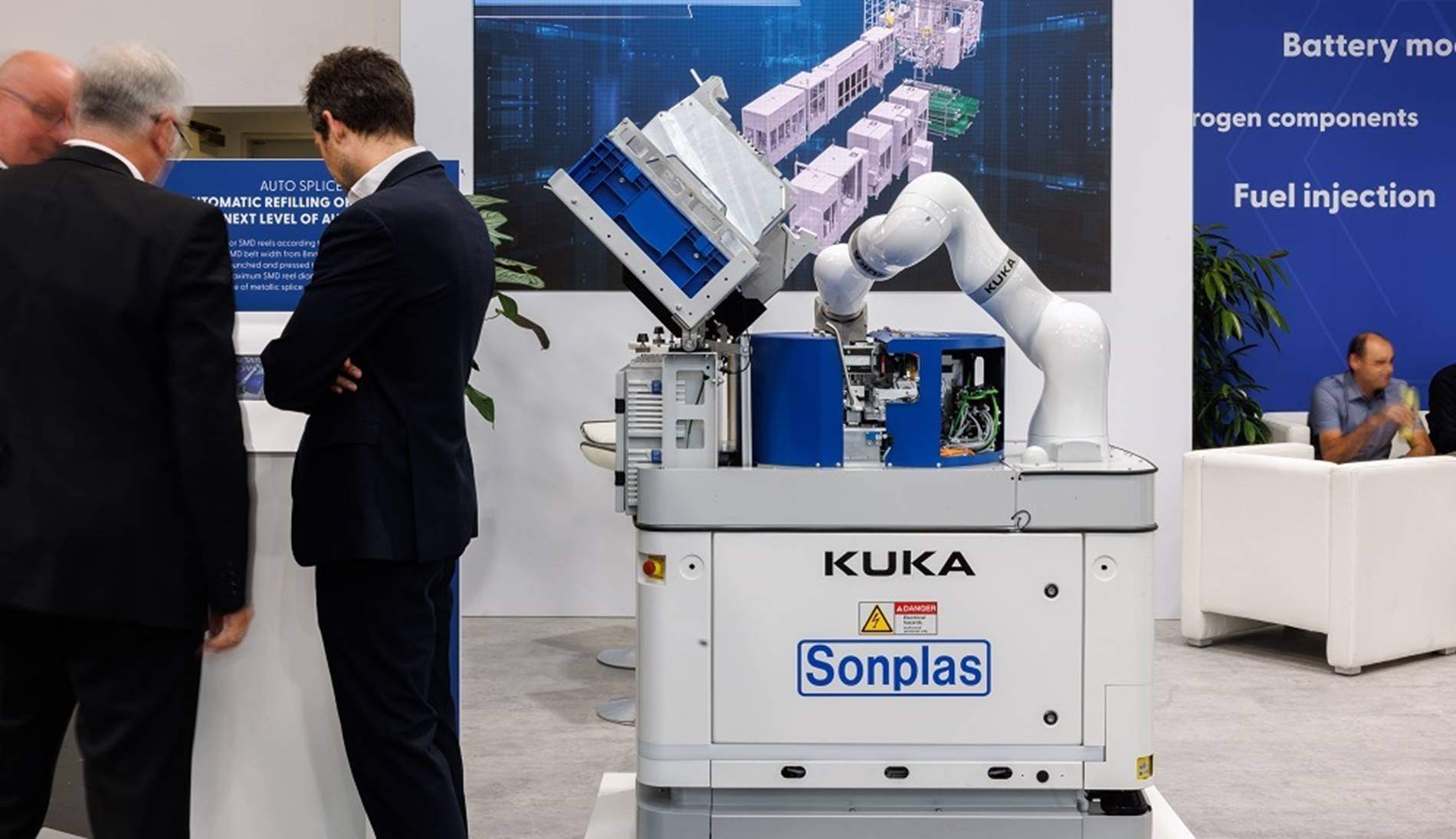
KUKA, ASMPT and Sonplas have joined forces as technology partners to automate this process for the Continental plant in Regensburg - with sensitive cobots mounted on a mobile, autonomous platform. The goal: to autonomously load the machines and connect the belt ends with the highest possible quality to avoid downtime. "Continental had asked us whether it would be feasible to automate the handsplicing machine they use. But we then looked at the whole process and did a bit of pioneering work," says Joachim Roess, KUKA's Global Key Account Manager for Continental.
State-of-the-art mobile robotics interacting with sensors and software - that's the core of the solution developed. Dr. Markus Fischer, Head of Industrial Engineering at Continental, reports on the initial experiences with the solution in live operation: "The initial experiences are very promising. Even if it is not yet technically possible to industrialize this solution, we - as an innovative Industrie 4.0 plant - will continue to try to solve the existing technical challenges in order to make it possible to automate it."
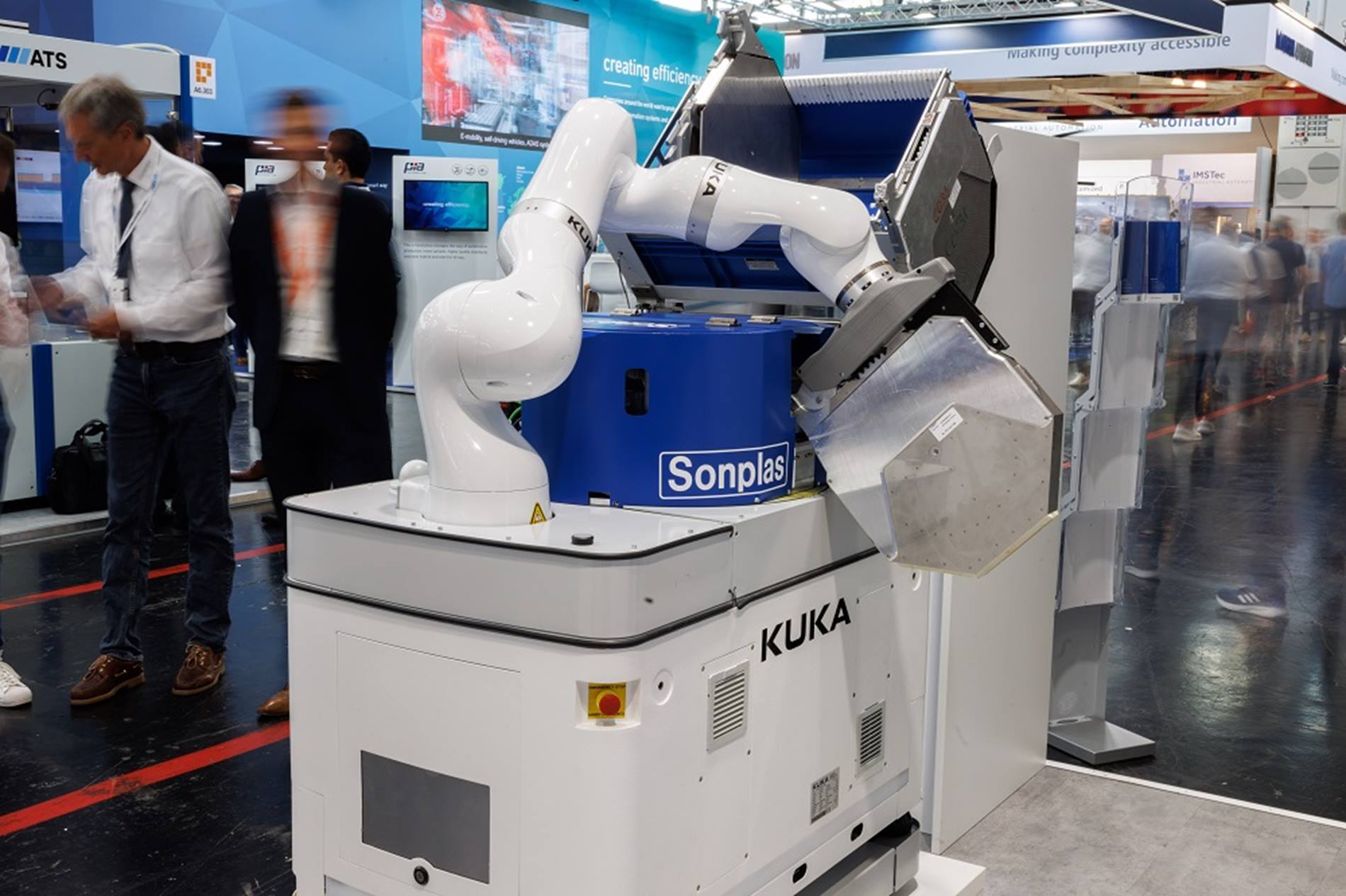
"With the mobile robot, we can approach each machine individually, and we store the belts in standardized cassettes so that the robot always has the same gripping points - regardless of the size of the respective good," says Otmar Honsberg, giving an insight into the technical implementation. This is not yet a technologically market-ready solution. But the technology partnership shows which potentials are currently still unused.
The next step, for example, could be to consider industry-wide standardization of the material when the belts are delivered to end processors such as Continental. Such standards would help to further automate and thus remain competitive. However, this solution as a result of the technology partnership could already be integrated very well into existing SMT lines. "Such projects play into our KUKA DNA, we drive them with a lot of heart and soul because we see ourselves as a technology leader," says Otmar Honsberg.


