
Ten Questions Craftmen Should Ask Themselves Before Automating
Robots produce consistent quality at a calculable price. Nevertheless, many craft businesses are still unsure whether they should automate. Werner Hampel experiences this again and again: The co-founder of the German Robotics Association therefore explains which ten questions companies should ask themselves at the beginning.
Sebastian Schuster
23 February 2022
Society
Reading Time: 3 min.
Simple, controllable and affordable – these are the outstanding characteristics of automation. But many craft businesses in Germany are still afraid to go down this path. Werner Hampel knows the fears. He has been an entrepreneur in the field of robotics for 30 years: “We get a lot of calls from craft businesses saying: ‘I have a work step where I could well imagine a robot. But then always comes the same follow-up question: Can I program it myself? And how much will it cost me?” But these are not the only questions that need to be answered.

With ten questions for the automation of the craft business
- Question 1: Should I automate? The expert says in this regard, “Some have the courage to go down this path.” And also in general, many companies would have to consider: If they don’t start automating soon, they may sooner or later cease to exist.
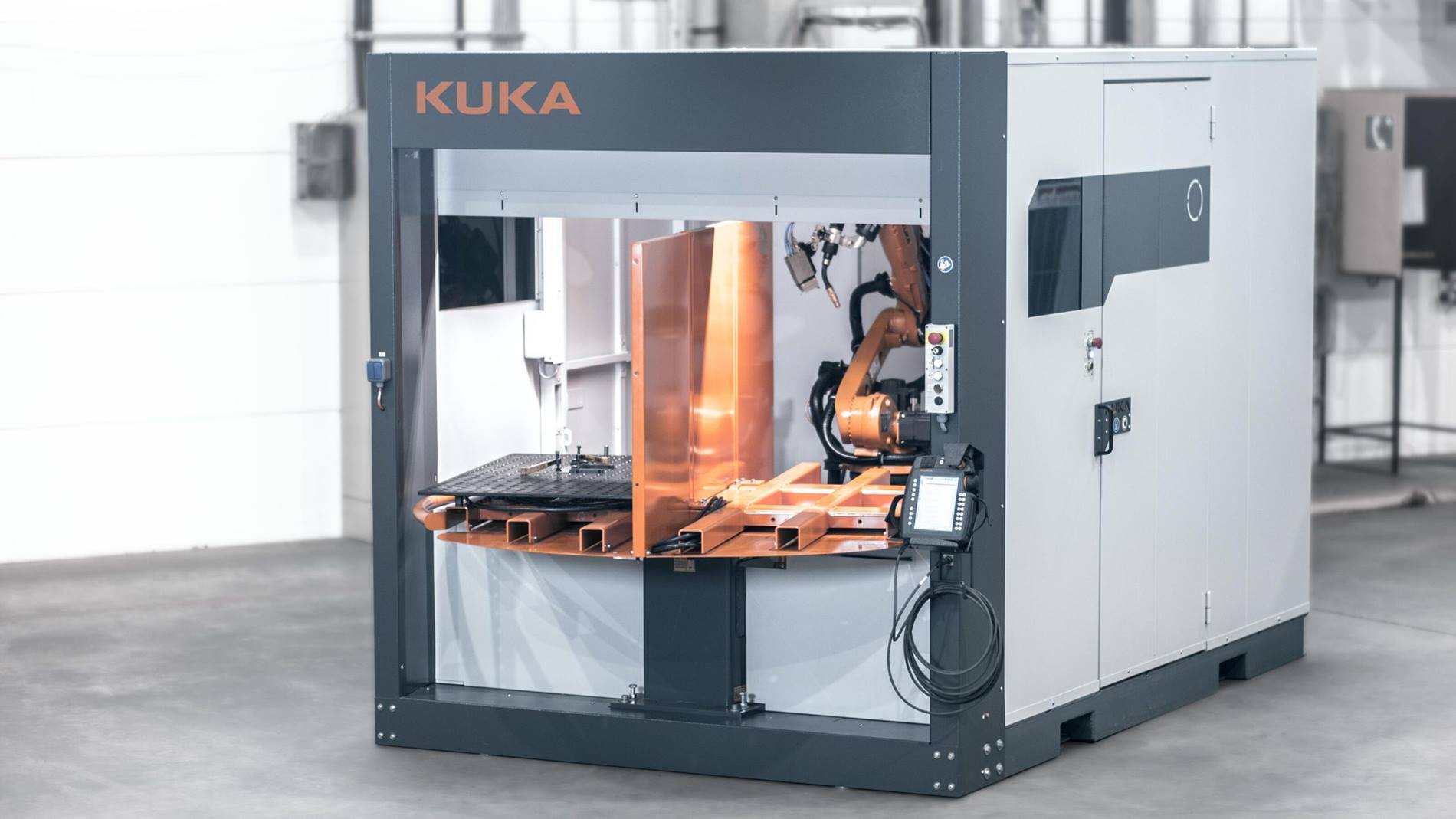
- Question 2: What do I want to automate? Robots are suitable for work that other employees in the company don’t like to do. “So I look for the job where automation will pay off the fastest,” advises Hampel. “A robot or a complete manufacturing cell from KUKA is suitable for this. That’s where I start and gain my first experience.”
- Question 3: What is technically and financially feasible? This includes points such as “What budget do I have for a robot?” and “What work is feasible?”
- Question 4: Which robot/cell do I want? “KUKA offers ready-made cells, so you should also consider whether you really need a single robot,” explains Hampel. To do this, the craft businesses should know where the robot or cell is to be located later and what advantages these two variants have. As a contact partner, KUKA can support the companies with advice.
- Question 5: What infrastructure do I need in the plant? As in the previous question, the location of the robot or cell is very important for an operation. The main issue here is the space required. Cells from KUKA can be up to 10 meters long and 8 meters wide – but can also be significantly smaller. KUKA can also help with the choice of location.
- Question 6: Do I need a (further) partner? Once the craftsman has finally decided on a robot or a cell, the question can also be answered as to whether he needs a system partner or whether he can contact KUKA directly. This always depends on the individual case.
- Question 7: What training do I need? “If a company decides on a cell, employees can get started after three to four days of on-site training from KUKA Service,” says the automation consultant. For more customized solutions, training may be needed that takes a little more time.
- Question 8: How do a robot colleague and my employees get along? “A robot makes a company very attractive – also for skilled workers and trainees,” says Hampel. At the same time, the acquisition of a robot does not mean that employees have to be laid off. On the contrary: “The robot relieves the workforce and offers the opportunity to take care of other, value-added and creative work.”
- Question 9: Will I receive funding? That varies from state to state. “In Bavaria, the subsidy has currently expired, but it will come back. In Berlin, for example, I had a customer who was able to finance 50 percent of his robot through subsidies,” Hampel explains.
- Question 10: At what point does the robot/cell pay for itself? Many craft businesses believe that they will not be able to raise the money. But the investment costs for a KUKA welding cell that runs in two shifts, for example, can pay for itself within around 17 months – depending on consideration of the residual value and average annual return on investment.
Only when these basic questions have been clarified can craft businesses begin with automation. Hampel sums up: “Anyone who already answers the first question with yes has taken an important step.” For the other questions, the companies can fall back on KUKA’s know-how.


Next article


