Friction welding has been around for a while.
The process of joining metals using friction-generated heat originated in the early 1900s in the form of rotary friction welding (RFW). A variation on that concept, friction stir welding (FSW), was patented in the 1990s. Both processes are highly effective in selected applications. In fact, the use of fully automated FSW and RFW systems is gaining popularity in industry sectors ranging from automotive electric vehicle (EV) production to truck axles, hydraulic cylinders and oil and gas exploration.
Friction Stir Welding
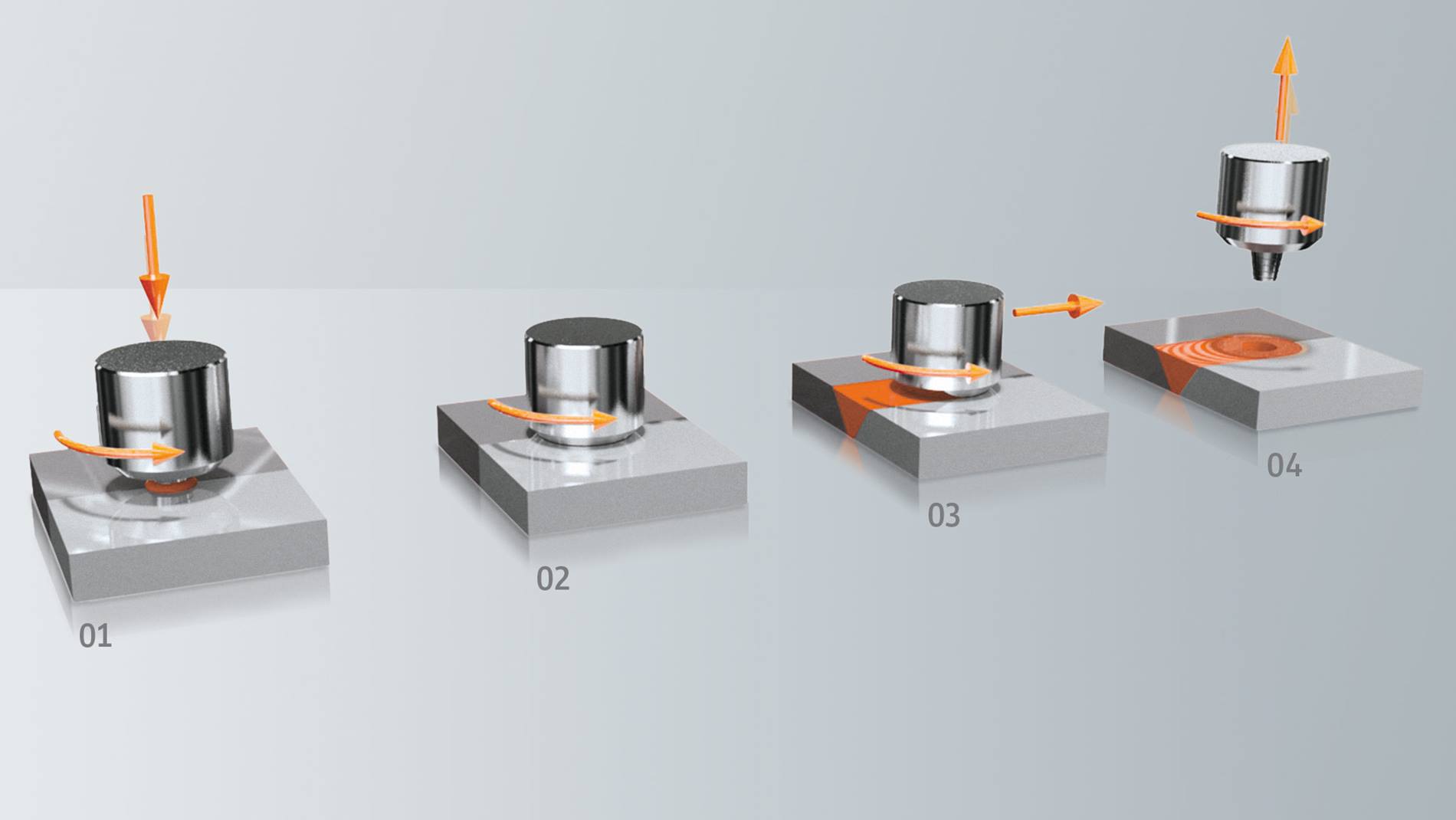
In
friction stir welding, a rotating tool with a central pin generates heat as it spins and moves along a joint between two components, plasticizing the materials being joined. The resulting bond is defect-free and strong, uses no filler material and requires little post-processing.
The unique process characteristics of FSW are prompting manufacturers to apply it in joining materials that previously have been difficult or even impossible to weld reliably and economically with traditional welding techniques. Typical problem jobs include joining thin gage and high grade aluminum components, copper alloys or dissimilar materials.
Manufacturing housings for electric vehicle (EV) batteries is a prime application for FSW. The housings generally are large, sometimes encompassing the length and width of a vehicle’s chassis. The housings require sealed internal channels to carry liquid used for battery cooling. Low weight is also a major priority. Manufacturers can conventionally machine the channels and then close and seal the battery housing via FSW, achieving excellent sealing integrity while minimizing weight.
Rotary Friction Welding
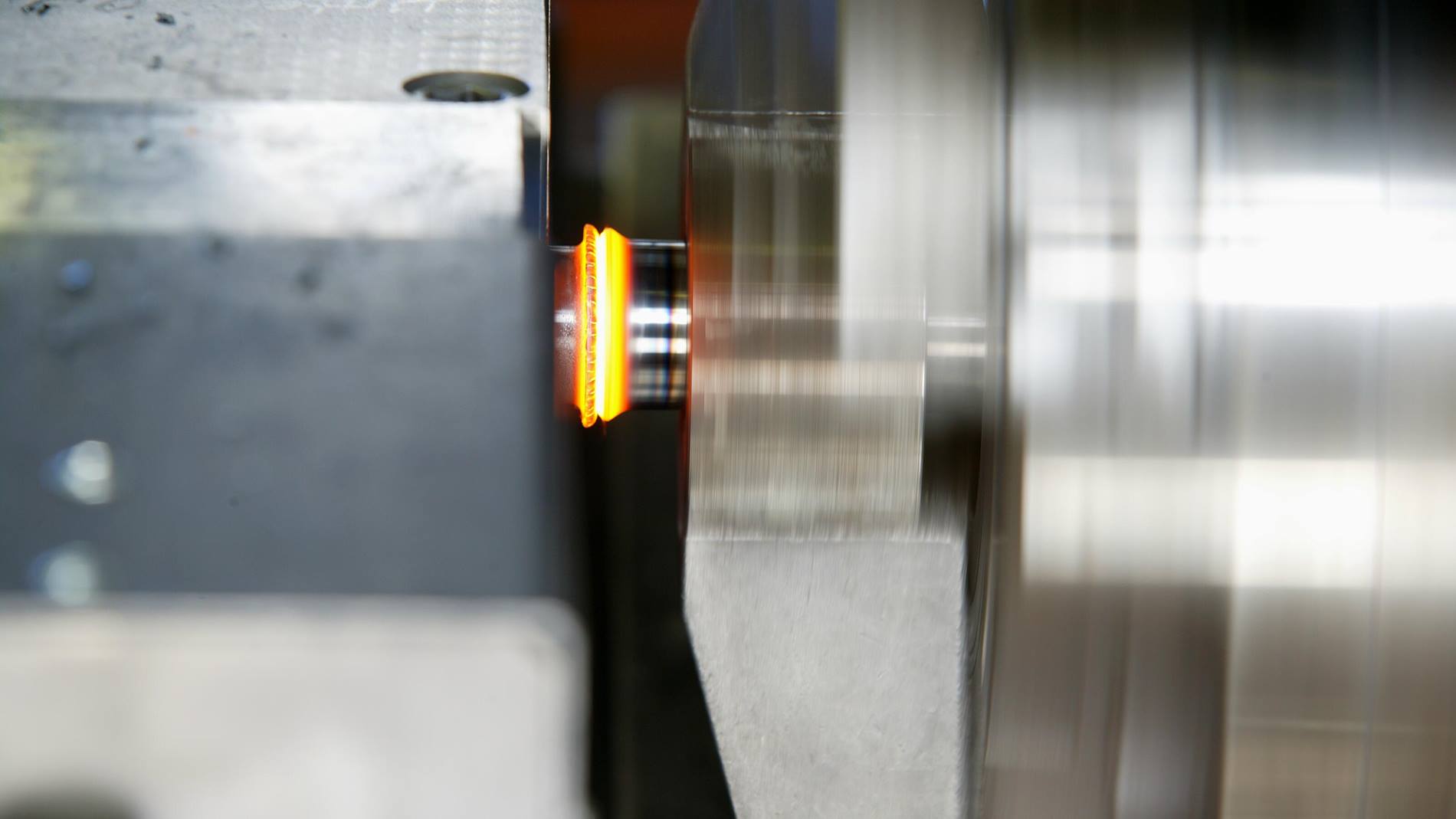
In the
rotary friction welding process two parts of circular cross section are brought together, one rotating and one held stationery, until the parent materials soften and plasticize. The application of forge force during or after part rotation completes the weld. The pressure on the workpieces displaces the softened material and a permanent molecular bond occurs across the entire joining area.
The bonds created by RFW consist of 100 percent parent material and the materials being joined do not reach their melting point. Hence, RFW is considered a solid-state joining process and not a fusion welding process.
RFW can join parts made of similar materials as well as those made of dissimilar, composite, or non-metallic substances. Principle applications of RFW include joining large parts for high-stress applications such as truck axles, hydraulic cylinders, and oil and gas transmission equipment. RFW machines offer robustness and accuracies that are critical in carrying out demanding operations.
Stir in automation for accuracy
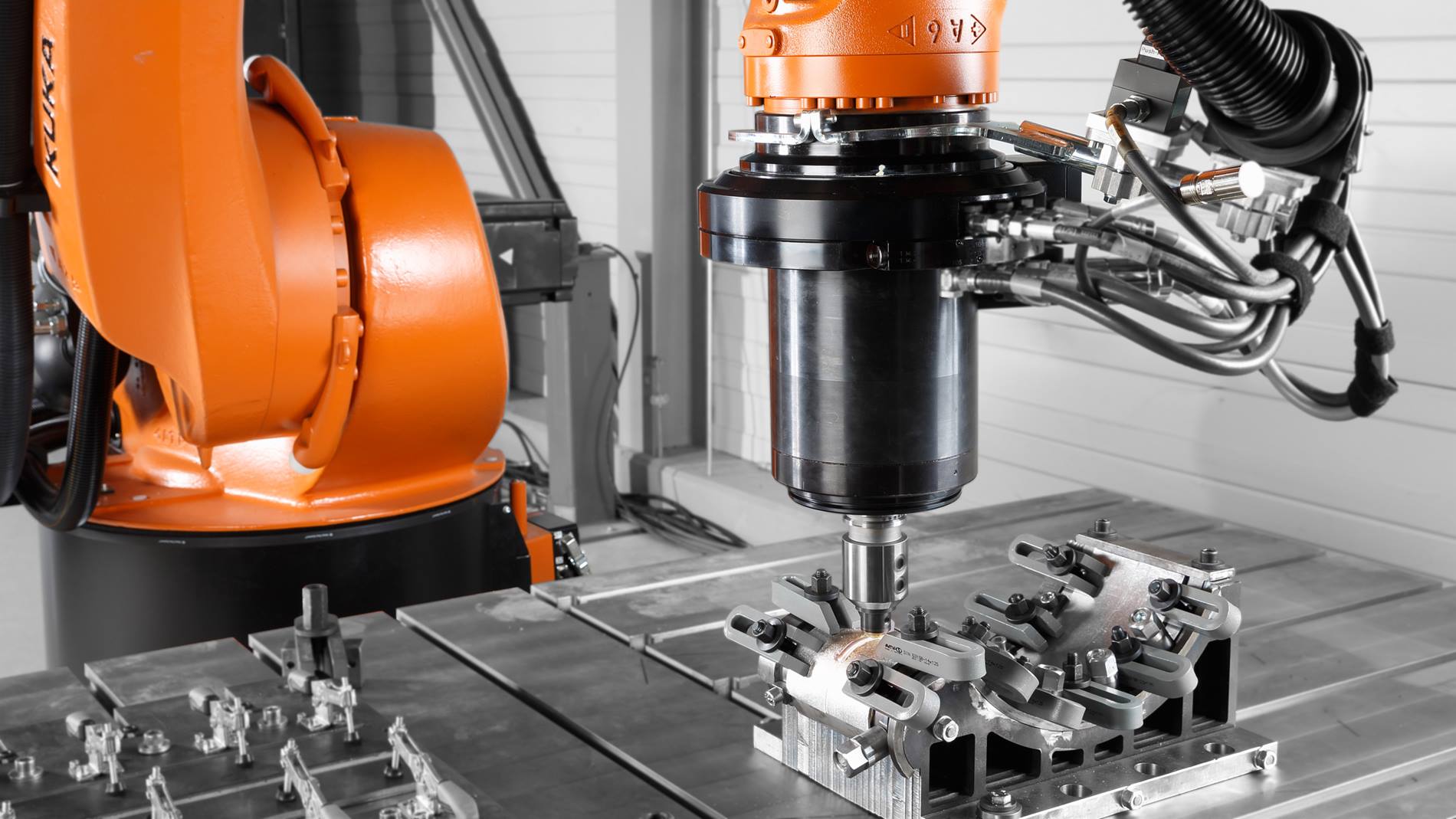
Robotic-based FSW systems, such as those from KUKA Robotics, are engineered to support high process efficiency in terms of low investment costs, maximum versatility and multiple configuration options. KUKA FSW systems offer consistent reliability and repeatability that are essential in manufacturing environments.
KUKA robotic FSW systems utilize six-axis robots that provide
modularity and flexibility needed to carry out 2D and 3D welding tasks. The systems represent scalable solutions and provide high efficiency (up to 95 percent) via the use of multiple workstations that permit simultaneous welding by several robots for complex larger components. KUKA path calibration technology generates path accuracy up to 0.5 mm.
KUKA FSW application modules offer system integrators and end users
maximum flexibility, permitting use of heavy-duty robots with process-specific software and hardware additions and expansions. The company’s KUKA Cell4_FSW module is engineered for use with the KR500 R2830 FORTEC MT robot with a
KR C4 controller and FSW 3 spindle with spindle cooling.
The
KR 500 FORTEC provides 6-axis flexibility with 2,830 mm - 3,326 mm of reach, load capacity of 340 kg - 500 kg, and repeatability of 0.08 mm. The integrated FSW spindle enables a force-controlled FSW process.
The
Cell4_FSW package is
Industry 4.0 ready, with interfaces based on OPC UA for easy data exchange. KUKA specifically developed the PCD (Process Control and Documentation) system for continuous-path FSW processes. PCD provides 100 percent real-time process monitoring as well as tracking of numerical and graphical parameters. It also delivers component and product data management and export, process diagnostics, electronic documentation and archiving of all process data.
Offering connectivity to cloud systems,
KUKA PCD ensures high productivity and traceable quality and data transparency. KUKA Cell4_FSW friction welding cells are seeing increased use for battery and electronics housings in the growing EV market.
Automation puts a productivity spin on RFW
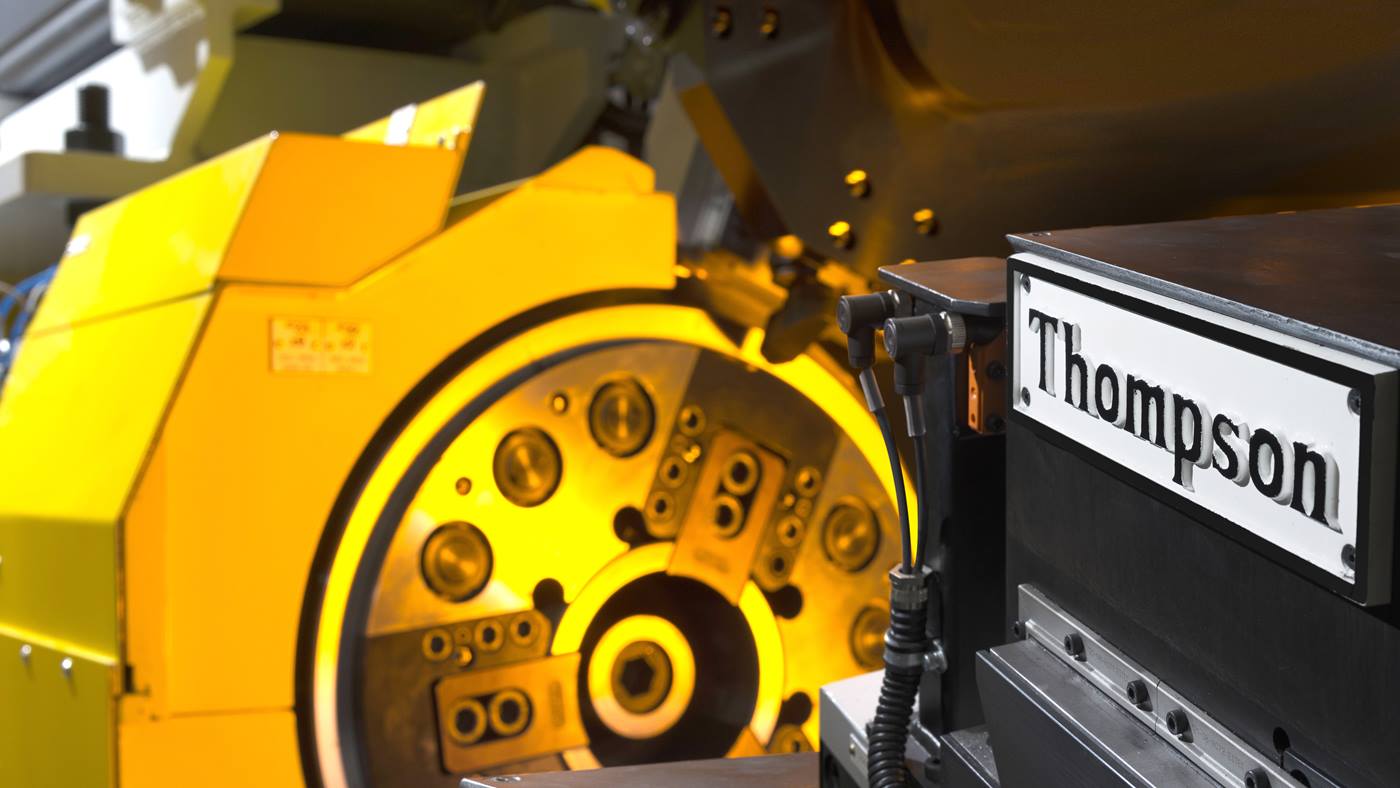
Longtime welding equipment manufacturer Thompson, now part of KUKA, has more than 60 years experience in developing and manufacturing a wide selection of standard and special friction welding machinery.
Thompson’s products are designed for automatically welding an
extensive variety of parts, ranging from small diameter components such as engine valves and electrical connectors, to medium diameter parts including drive shafts and hydraulic cylinders, and also large diameter assemblies such as API drill pipes and trailer axle tubes.
Other options are component measurement, marking and extraction, permitting flexible implementation of friction welding processes on a variety of material combinations and components. Special designs such as double-spindle or vertical orientation machines are available on request.
Thompson dedicated welder control software is programmed to provide the basic capabilities needed to set up and operate a friction welding machine. The PC-compatible platform enables intuitive programming and seamless connectivity. Straightforward automatic or manual programmable solutions offer control throughout the weld cycle of almost any special features that a particular application may require. Users of Thompson machines benefit from repeatability, traceability, accuracy and flexibility.
Despite somewhat limited familiarity amidst a significant portion of the present manufacturing community, friction welding processes – both FSW and RFW – offer a unique blend of efficiency and productivity in a growing range of contemporary applications. New product technologies such as EV transportation and an increase of product designs requiring bonding of difficult-to-weld and dissimilar materials are stirring (and spinning) new interest in the uniquely capable process of automated friction welding.